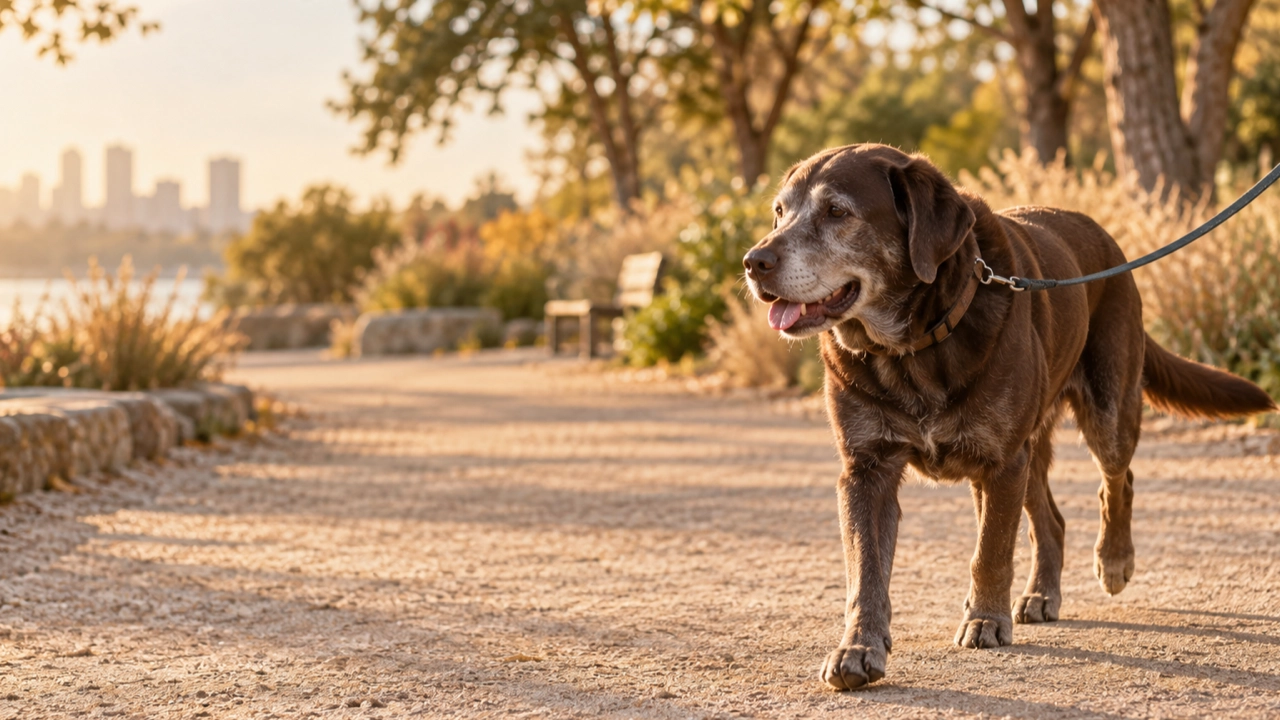
The walk has not changed much. The trees have, and your dog is spending more time licking their paws when you get home. Perhaps an ear has become troublesome again, just as it did last autumn. Small changes like these are worth noticing.
Do dogs get seasonal allergies? Yes. Some dogs react to environmental allergens such as pollen and mould spores, with flare-ups that follow the seasons. Unlike the familiar human picture of sneezing and a runny nose, dogs often show their discomfort through itchy skin. A seasonal pattern is a useful clue, not a diagnosis.
Why autumn can bring a flare-up
Allergies involve the immune system reacting to something that would otherwise be harmless. Which triggers matter depends on the dog, the local environment and the weather. Some pollens remain around in autumn. Damp leaf litter and decaying vegetation can harbour mould, making a familiar route a different exposure from the same walk in summer.
Environmental allergies are not always seasonal. Indoor allergens, including dust mites, can cause trouble throughout the year. A dog may have both seasonal and year-round triggers, so the pattern is not always tidy.
Do not assume that falling temperatures will end the itch. Equally, not every autumn scratch is an allergy. Parasites, infections, contact irritation and injuries can look similar. The season helps frame the question; it does not answer it alone.
Recognise the common signs
Dog seasonal allergy symptoms often centre on the skin, feet and ears. Look for a change from your dog’s usual behaviour rather than one isolated scratch.
- Repeated itching or rubbing. Your dog may scratch their body, rub their face along furniture or struggle to settle.
- Paw licking or chewing. Feet may become red or sore between the toes. Repeated licking can leave the fur stained, but staining alone does not identify the cause.
- Ear trouble. Head shaking, scratching at the ears, redness, an unusual smell or discharge deserve attention. Allergies can contribute to recurring ear problems, but an ear infection needs its own assessment.
- Skin changes. Red patches, thinning fur, scabs or skin that becomes thicker or darker over time may accompany persistent irritation.
Sneezing or watery eyes can occur, but they are less useful clues than ongoing itch. Coughing, breathing changes or a painful eye should not be dismissed as ordinary seasonal allergies.
An itchy paw in autumn also deserves a closer look for a cut, damaged nail or something caught between the toes. Sudden licking of one foot, especially with limping, is a reason to check for a local problem rather than assume a general allergy.
Separate seasonal, food and flea allergies
The distinction between dog allergies and food allergies is not visible in the skin alone. Environmental and food allergies can both cause itchy paws, irritated ears and recurring skin problems. A dog can also have more than one allergy.
Environmental allergies may worsen at a similar time each year or after particular exposures. That history is helpful, though indoor triggers can make symptoms persist across seasons.
Food allergies tend to cause problems while the offending ingredient remains in the diet, rather than follow the calendar. Some affected dogs also have digestive signs, but many do not. A familiar food is not automatically ruled out because your dog has eaten it for years. Diagnosis usually involves a strict, veterinarian-guided elimination diet followed by a planned reintroduction. Randomly changing foods can make the picture harder to interpret.
Flea allergies are reactions to flea saliva. Itching around the base of the tail, lower back and thighs can be a clue. You may not see live fleas, and a small number of bites can cause substantial discomfort in a sensitive dog. Keep parasite prevention under veterinary guidance rather than ruling fleas out because the weather has cooled.
These are patterns, not home diagnostic tests. A veterinarian may need to check for parasites and infection before deciding whether allergy is the underlying issue.
Make the post-walk routine gentle
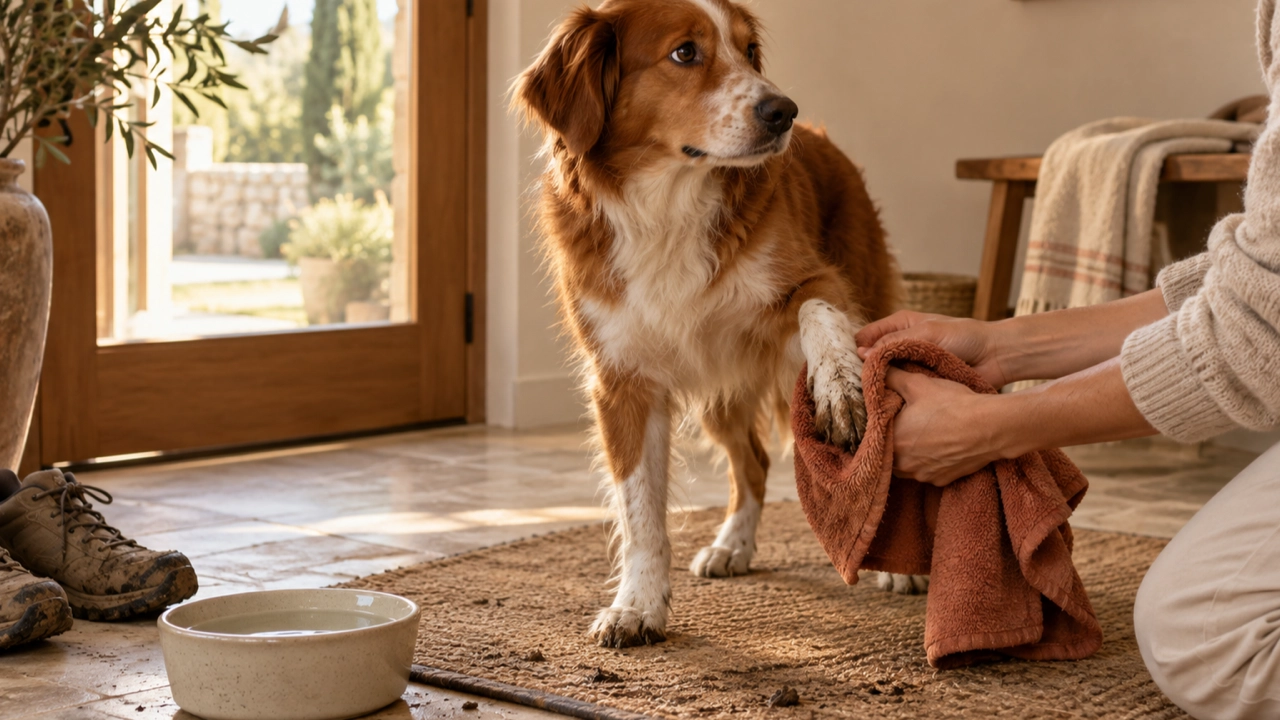
Removing outdoor residue is a low-risk place to start. After a walk, gently wipe the paws with a soft cloth dampened with plain lukewarm water. Check between the toes, then dry carefully. If the feet are muddy, a gentle rinse may be more comfortable than repeated wiping.
Our guide to cleaning your dog’s paws after a walk covers the routine in more detail. Keep the process brief and calm. Scrubbing already irritated skin adds friction without solving the cause.
Avoid fragranced household wipes, essential oils and human skin creams. Ask your veterinarian before introducing shampoos or other skin products, especially if the skin is sore. More washing is not automatically better; frequent bathing with an unsuitable product can worsen irritation.
If a particular route seems to precede a flare-up, try a different path with less long grass or damp leaf litter. This may reduce exposure, but it cannot guarantee an itch-free walk. Comfortable exercise and sniffing still matter.
Keep the home easy to maintain
Wash bedding and frequently used throws regularly according to their care labels. Use a mild, fragrance-free detergent and rinse thoroughly. Let everything dry fully before returning it to the bed. Rotate washable covers so this remains a manageable habit.
Vacuum the places where your dog rests and wipe hard surfaces with a damp cloth rather than stirring dust into the air. Address persistent damp or visible mould at its source. Avoid scented room sprays around a dog with irritated skin or airways.
There is no need to turn the house into a sterile space. A few repeatable routines are more useful than a weekend of aggressive cleaning with unfamiliar products. Our guide to dog-friendly home design offers practical ways to make shared spaces easier to care for.
Track the pattern without delaying care
A short record helps you describe what is happening. Note when itching starts, which areas are affected, where you walked and whether ears or digestion have changed. Record food, treats, new cleaning products and parasite prevention too.
Take clear photos of visible skin changes and note whether licking interrupts sleep or play. Bring the record to your appointment. Change one low-risk household habit at a time so any improvement is easier to understand.
Do not wait for another season to prove a pattern. Tracking supports veterinary care; it should not postpone it while your dog is uncomfortable.
Know when to see a veterinarian
Book an appointment for persistent or recurring itching, repeated ear problems, hair loss or skin changes. Seek prompt advice for raw skin, bleeding, swelling, discharge, a strong smell, pain, limping or licking that prevents rest. Damaged skin can develop secondary infections that ordinary cleaning will not resolve.
Facial swelling, difficulty breathing or collapse needs emergency veterinary attention. These are not signs to manage with a paw wipe and observation.
Do not give human allergy medicines or use leftover ear treatments without veterinary direction. The right plan depends on the cause and your dog’s health. Everyday care can reduce exposure and help you notice changes, but it cannot replace treatment when it is needed.
The aim is a comfortable dog, not a perfectly identified pollen. Notice the pattern, keep routines gentle and ask for help before the itch becomes the centre of their day.
Join the Ottimo Plus waitlist for considered dog essentials designed around everyday life together.