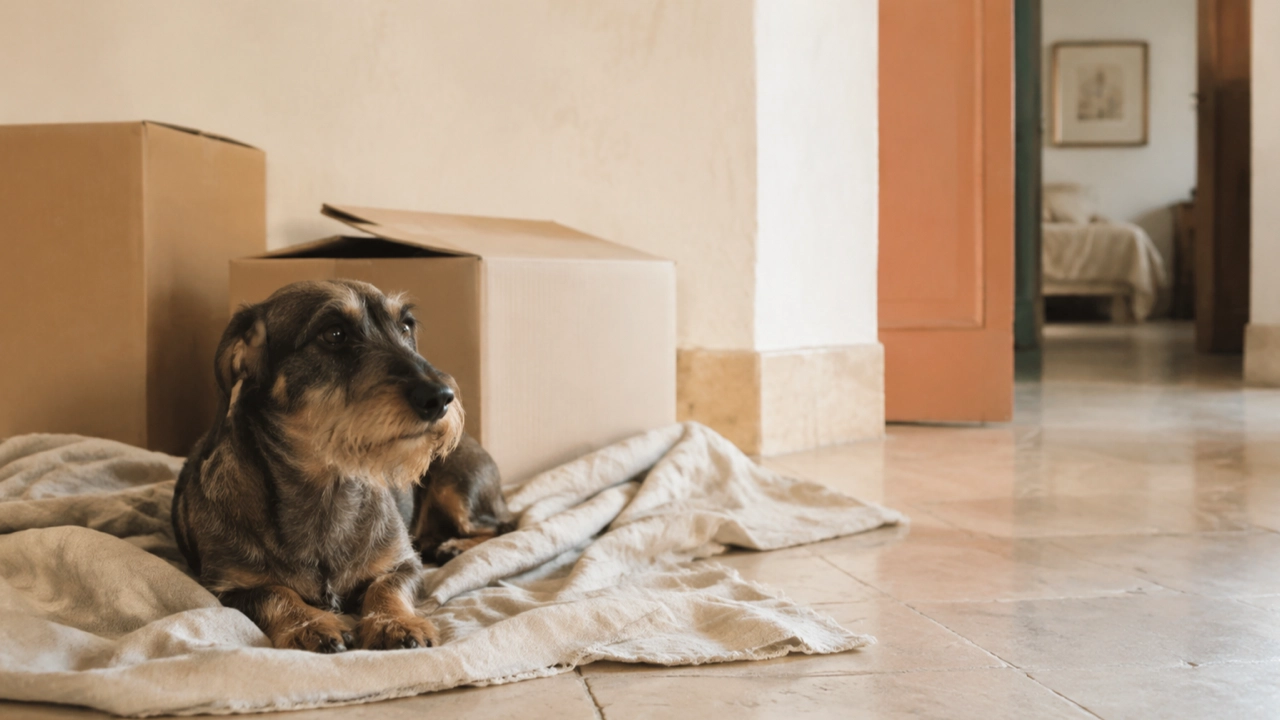
Moving house rearranges every familiar cue in a dog’s day. The rooms smell different. The usual route to the door has disappeared. Boxes arrive before the old home is gone, then strangers move through both spaces. Even a confident dog can become quieter, clingier, more alert, or temporarily less reliable with habits they normally understand.
The answer is rarely to make the new home exciting. It is to make it legible. A small territory, a familiar routine, and calm repetition give your dog enough information to begin treating the space as home.
Prepare a quiet base before moving day
Choose one room or contained area in the new home as the starting point. Set it up before your dog arrives if possible. Their usual bed, an unwashed blanket, familiar bowls, and one or two known toys matter more than buying anything new. Familiar scent is useful information in an unfamiliar place.
Check the room as carefully as you would a hotel room with a curious toddler. Secure windows and balcony doors. Move cleaning products, trailing cables, medicines, houseplants, and unpacking tools out of reach. Confirm that garden gates close properly before the lead comes off.
Do the same at the old home on the day itself. A closed, quiet room away from the front door is safer than letting your dog follow every box. If the removal process will be noisy or the door cannot stay secure, arranging for a trusted person to care for them is often the calmer option.
Keep the journey ordinary
Use the travel setup your dog already knows: the same secured crate, carrier, or vehicle restraint, with planned breaks for a longer journey. Moving day is not the moment to introduce unfamiliar travel gear.
Bring a separate dog bag that does not disappear into the removal van. Include food, water, bowls, medication, waste bags, a lead and harness, a towel, and bedding. Keep identification and microchip contact details current before the move. The practical goal is simple: everything your dog needs for the first evening should be available before the first box is opened.
Begin with one room, not the whole house
On arrival, take your dog outside on the lead first and give them time to toilet. Then bring them directly to the quiet base. Offer water, settle nearby, and let them investigate at their own pace.
Opening every door at once can be overwhelming. Start with the base room, then introduce one additional area when your dog looks comfortable: loose posture, normal interest in food, resting, and a willingness to explore without frantic scanning. Keep unused rooms closed for now. A smaller world is easier to understand.
Supervise early exploration, even if the new home seems secure. Previous residents may have left food, pest treatments, gaps behind appliances, or garden plants that were never relevant to you before. In a rental, also check fences, shared entrances, and any place a small dog could slip through.
Rebuild the old rhythm in the new place
Dogs notice sequence. Breakfast, a walk, rest, and the evening meal arriving in a familiar order can be reassuring even when every wall has changed. Keep feeding times, walk times, bedtime, and household rules as consistent as the move allows.
Use the same cues for doors, meals, and settling. If the dog was not allowed on the sofa before, changing that rule for a few unsettled nights can create more uncertainty later. Warmth and consistency can coexist.
The first walks should be quiet orientation loops rather than ambitious outings. Repeat a short route so the new smells become recognisable, then expand gradually. If the move has disrupted your normal schedule, this guide to whether one walk a day is enough offers a useful way to think about routine and the needs of the individual dog.
Make introductions slowly
A new home often arrives with new neighbours, delivery drivers, building sounds, and other dogs. There is no need to introduce everything in the first weekend. Keep greetings calm and brief. Let your dog retreat to their base without being followed or coaxed back out.
If another pet already lives in the home, use separation and controlled introductions rather than expecting them to negotiate immediately. Gates, pens, and leads can create distance without drama. Feed separately and supervise access to beds, toys, and narrow spaces while both animals learn the new arrangement.
The same restraint helps with visitors. People may be eager to see the house, but a quiet first few days are often kinder. Ask early visitors to ignore the dog until the dog chooses to approach.
Practise being alone before you need to leave
After a move, some dogs begin shadowing their owner from room to room. It makes sense: you are the one familiar element in the building. But staying together every minute and then leaving for a full working day creates an abrupt second change.
Once your dog can rest in the new home, practise very short absences. Step behind a door, take rubbish out, or leave the building briefly, then return calmly. Increase the time only while your dog remains comfortable. A familiar food puzzle or safe chew can help if it is something they already enjoy, but it should not be used to mask panic.
If you see persistent pacing, vocalising, destruction around exits, toileting despite normal training, refusal of food, or attempts to escape, treat it as distress rather than disobedience. Do not punish the aftermath. Speak with your veterinarian or a qualified behaviour professional, particularly if the change is intense, continues, or puts the dog at risk.
Expect progress to be uneven
Settling is not a straight line. A dog may sleep well on the first night and become more watchful once the initial exhaustion passes. They may react to a lift, refuse one street, or need more distance from unfamiliar dogs than usual. Notice the pattern without turning every change into a crisis.
Keep a simple record if you are unsure: appetite, sleep, toileting, walks, time alone, and any moments of distress. It gives you a clearer picture than memory during a busy week and makes a veterinary conversation more useful if you need one.
For everyday outings, the same principle applies to what you carry: familiar, useful, and no more than necessary. Our guide to dog travel gear that actually gets used is a practical companion for rebuilding a portable routine after the move.
A successful first week does not require your dog to love every room. It requires a safe base, predictable days, and enough time to investigate without pressure. Home is not the address. It is the pattern that begins to repeat there.
Join the Ottimo Plus waitlist for considered dog essentials designed around everyday life together.