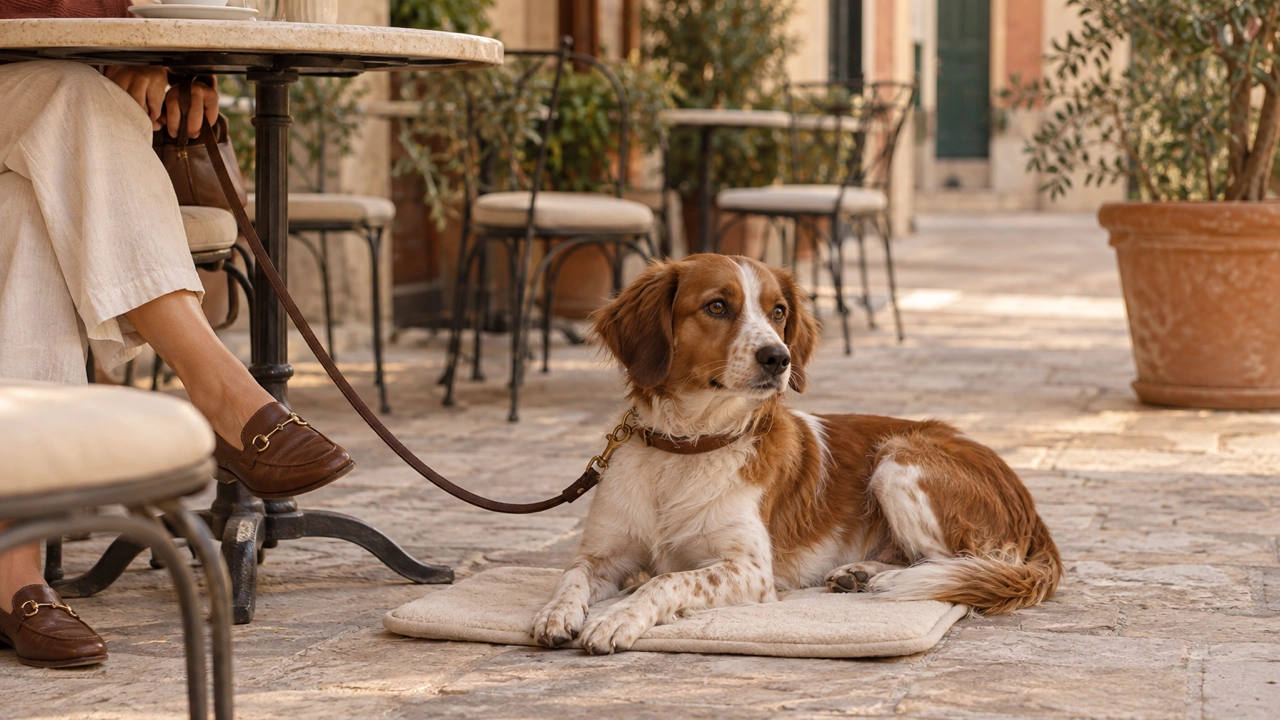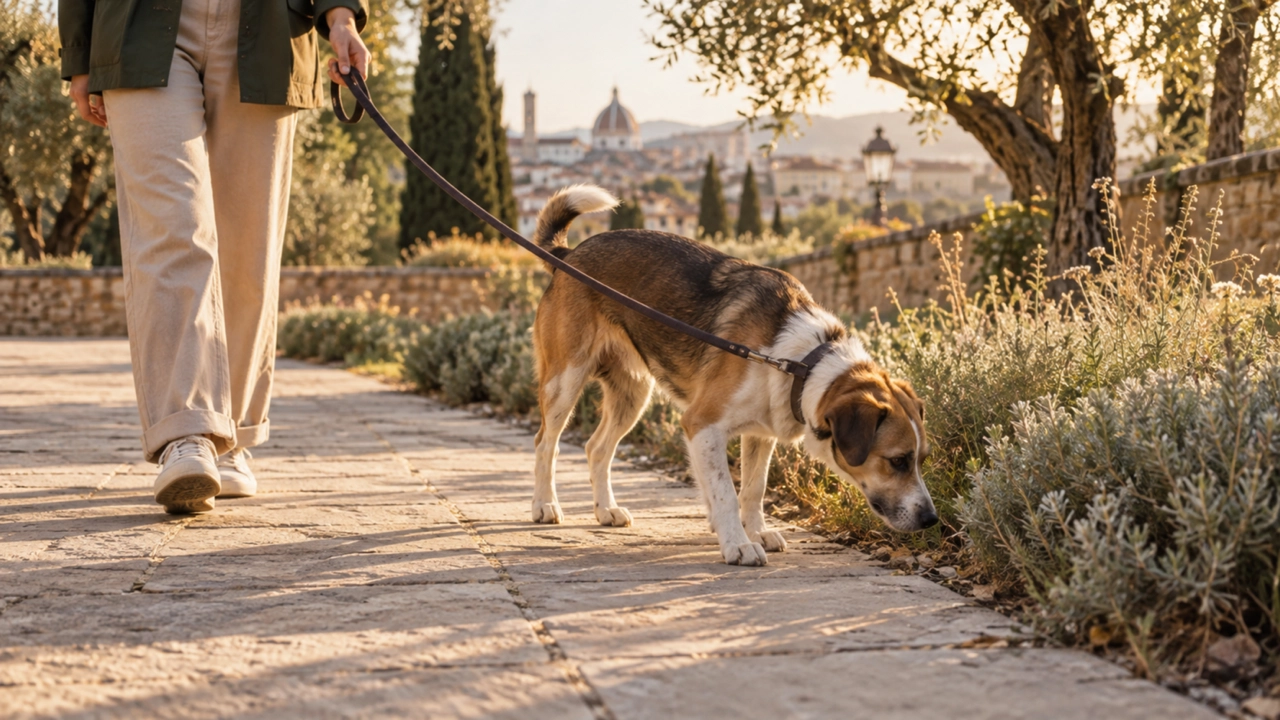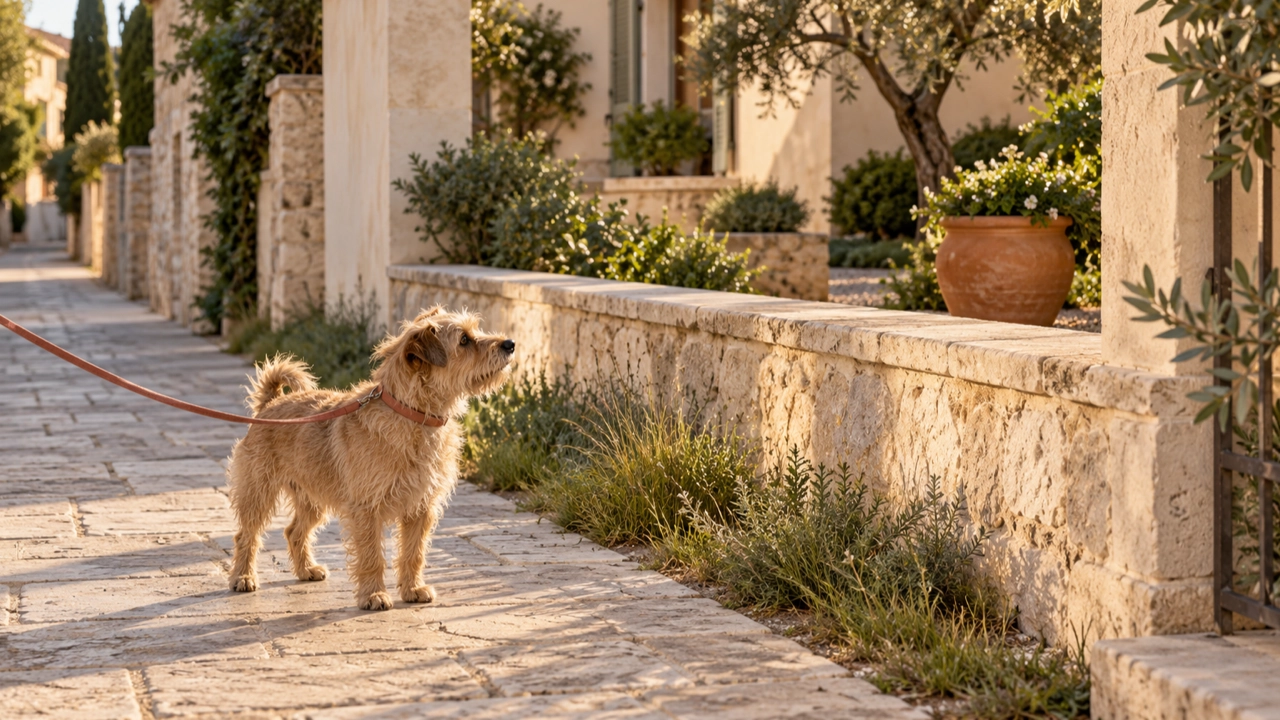
A dog sees an interesting patch of grass. The person who tends it sees the hours spent keeping it alive. Neither view is difficult to understand. The awkward moment comes when we assume our own is the only one that matters.
Is it OK to let your dog pee on someone’s lawn? As a default, avoid private lawns unless you have permission. Choose a suitable shared toilet spot instead, away from planting and places where people sit or play. An unfenced front garden is still someone’s garden.
This is less about finding a technical right to a patch of ground than making daily walks easier for everyone. A little attention before the lead reaches full length usually prevents a much larger conversation afterwards.
Why urine leaves marks on grass
Dog urine contains nitrogen compounds. Nitrogen helps grass grow in suitable amounts, but a concentrated dose can damage it. A small, repeated toilet spot may receive more than the grass can handle, leaving a yellow or brown patch. Sometimes the grass around it looks greener, where the dose is less concentrated.
The familiar explanation that urine burns a lawn simply because it is acidic misses the main issue. Concentrated nitrogen is a key reason for the damage. Grass condition, dry weather and repeated visits to the same place also influence what happens.
That matters because the practical response is dilution and better placement, not trying to change a dog’s urine chemistry. Lawn care is not a reason to add supplements or alter a dog’s diet. Nor is every brown patch evidence of a dog visit. The useful point is that urine can cause damage, even when the dog is doing something entirely normal.
A verge is not the same as a front garden
The strip of grass between pavement and road is often called a verge or boulevard. In some neighbourhoods, ordinary verge grass is a familiar place for dogs to toilet. That convention is not universal permission. Ownership, maintenance and expectations vary, and residents may tend that strip themselves.
Look at the space rather than relying on its location alone. A planted tree bed, a carefully edged lawn or a strip with a request to keep dogs off deserves a different choice. Small new trees and low plantings should not become marking posts. Avoid playgrounds, picnic lawns and the grass immediately around seating too.
Keep your dog out of private gardens, off flower beds and away from front steps, gates and outdoor furniture. A low wall or an open driveway is not an invitation. Where the boundary is unclear, stay on the pavement and move towards an established, permitted toilet area.
A public path does not make everything within lead reach public. Keep enough slack for comfort, but not enough to let your dog wander across a boundary before you notice. Our piece on what makes a city dog-friendly explores the other half of this arrangement: shared places work better when dogs have somewhere appropriate to go.
Water helps, but does not grant permission
Rinsing a fresh urine spot with plain water helps dilute the concentrated nitrogen and move it into the soil. It is most useful promptly, before damage develops. A splash over an already scorched patch will not turn dead grass green again.
Carry a little extra water if your usual route includes appropriate grass toilet spots. Pour gently over the affected area rather than making a token gesture beside it. The amount needed varies with the spot and conditions; there is no single small splash that guarantees protection.
On a private lawn, an offer to rinse should come with an apology and permission to do so. Do not enter the garden or reach for someone’s hose uninvited. Water is a useful courtesy, not a licence to choose a place its owner has asked you to avoid.
Keep drinking water for your dog separate from what you plan to use for rinsing. If supplies are limited on a warm walk, your dog’s drinking needs come first. Choose a better toilet location rather than using up their water to make a poor one acceptable.
Keep hydration ordinary
A well-hydrated dog may produce less concentrated urine, so regular access to drinking water is one helpful lever. It is not a promise that their urine will leave lawns untouched. The quantity deposited and how often a spot is used still matter.
Offer fresh water at home and sensible drinking breaks outside. Do not restrict water to reduce toilet stops, or encourage excessive drinking to protect grass. The aim is a comfortable dog following a normal routine, not a lawn-care strategy built around their body.
For everyday etiquette, choosing the right place is more dependable than trying to control the urine itself.
Teach a convenient “go” spot
Make the considerate option easy to repeat. Choose a permitted, accessible toilet area near the start of your route. It should be away from traffic, delicate plants and busy entrances, with a surface your dog is comfortable using. A designated dog toilet area is useful where one exists.
Visit it first, especially after waking or a long rest. Give your dog time to sniff on a relaxed lead. As they begin to toilet, quietly say a cue such as “go toilet”. Reward them just after they finish. Over repeated visits, the words can become associated with the action.
Later, try the cue when you reach the spot and your dog is likely to need it. Keep the expectation modest. A cue is an invitation, not a command that overrides their needs. If nothing happens, continue calmly and offer another suitable opportunity soon.
Do not withhold toilet breaks until your dog performs in the perfect place. Puppies and older dogs may need closer, more frequent opportunities. Plan for that rather than expecting them to hold on through a long stretch of unsuitable frontage.
Leave room for exploration after the toilet stop. Why dogs stop to sniff on walks explains the value of those pauses. Sniffing is part of a good walk; it need not mean allowing every garden to become a marking stop.
When a neighbour objects
Start with the simplest useful sentence: “I’m sorry. We’ll avoid this spot.” Move your dog back to the pavement, listen and offer to rinse if it would help. You do not need to agree about every detail to respect a clearly stated boundary.
Avoid explaining that all dogs do it, that rain will sort it out or that the lawn looks damaged already. Those replies turn a small inconvenience into a judgement about someone else’s home. Acknowledge the concern without promising that one rinse will repair existing damage.
If the exchange becomes heated, keep your distance and leave calmly. There is no need to settle a disagreement about the verge during a toilet break. Change the route or choose another spot next time.
A considerate walk still gives a dog time, water and freedom to investigate. It also leaves the neighbour’s garden as you found it. The best routine makes those two things compatible, without much ceremony.
Join the Ottimo Plus waitlist for considered dog essentials designed around everyday life together.