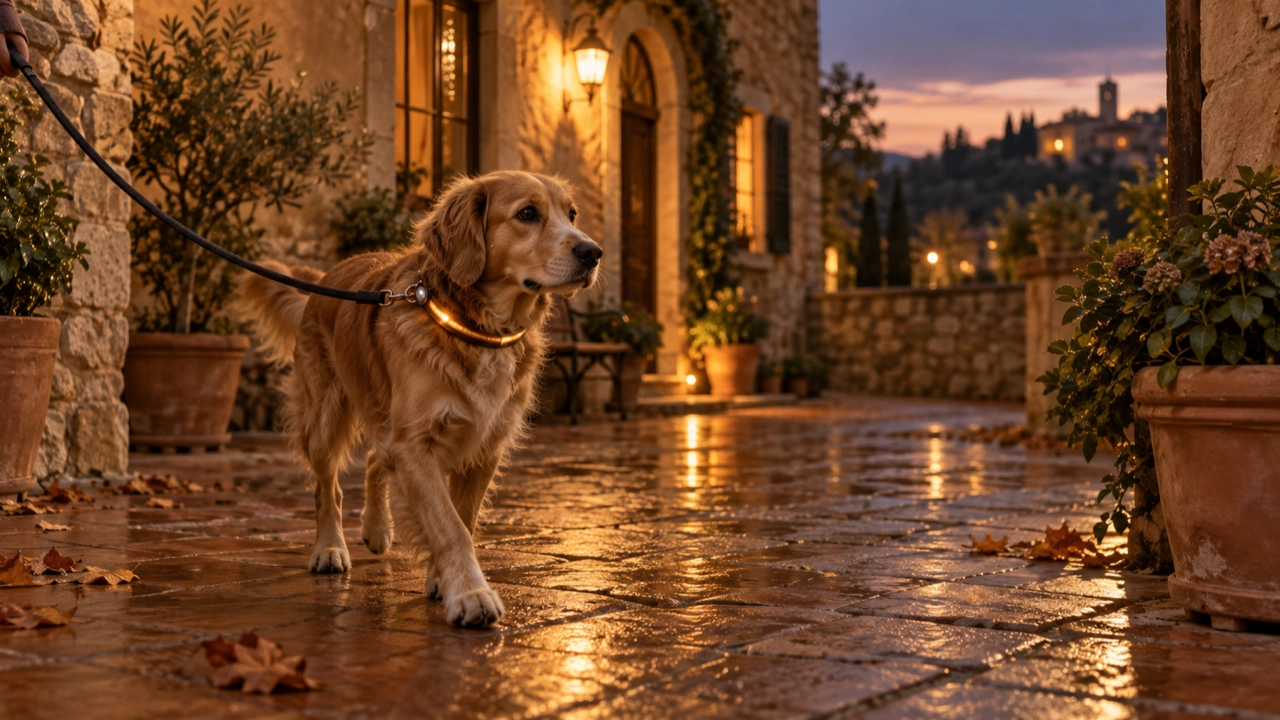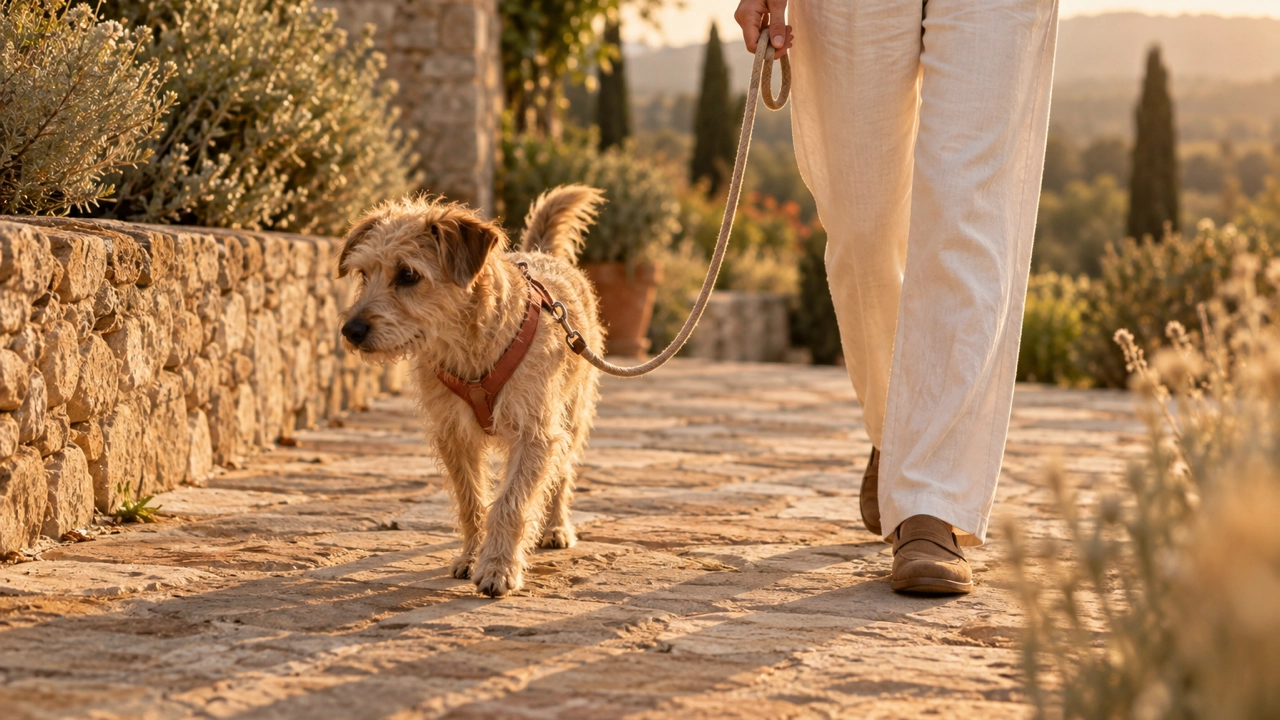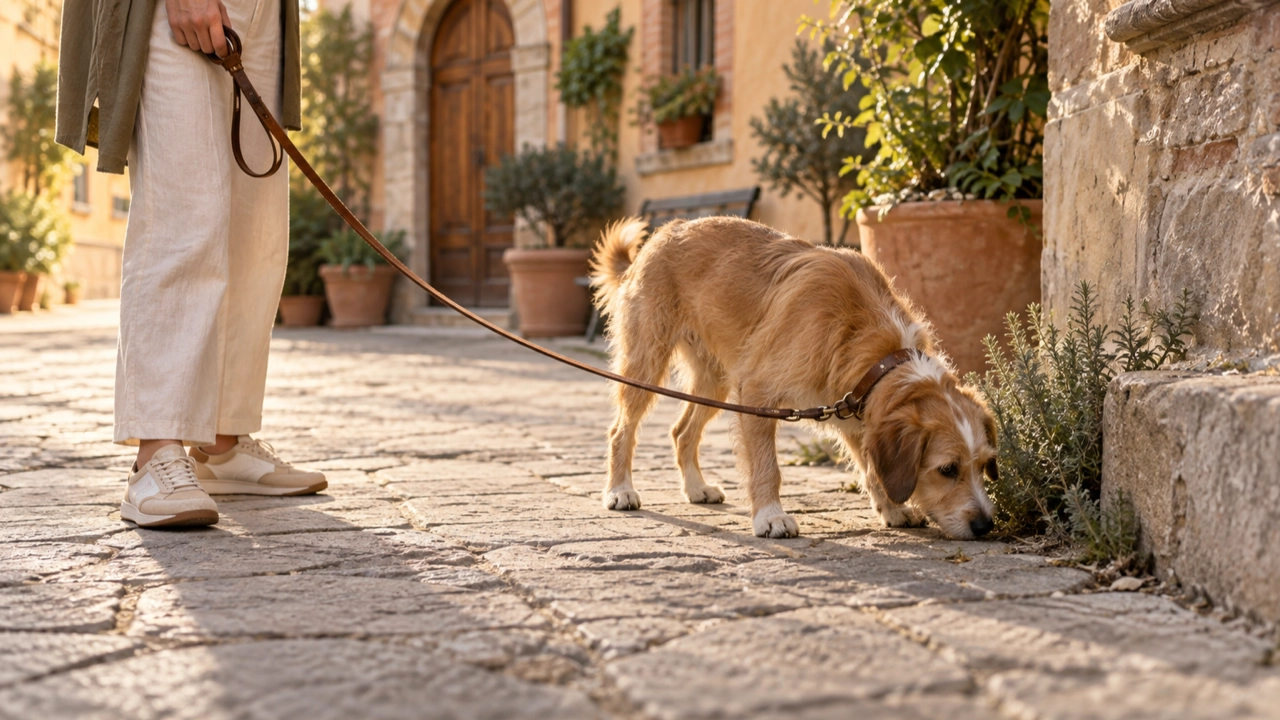
Your dog stops at a lamppost. Then a gate. Then a patch of pavement that looks entirely unremarkable. From the other end of the lead, it can feel as though the walk has barely started. For your dog, however, the interesting part may already be under way.
Sniffing is one of the main ways dogs investigate their surroundings. A familiar street does not smell the same from one day to the next. Other dogs have passed, weather has moved scents around, bins have appeared, gardens have changed and a hundred small traces have been left behind. Pausing is not necessarily stubbornness or poor walking. Often, it is simply attention.
The useful question is not whether your dog should ever stop. It is how to make room for normal exploration while keeping the walk comfortable, safe and practical for both of you.
A walk is more than distance
People tend to measure a walk in minutes, kilometres or steps. Dogs experience more of it through scent, sound and close observation. A slow ten minutes on an interesting route can therefore offer something different from ten brisk minutes on a quiet pavement.
This does not make distance irrelevant. Dogs still need movement suited to their age, health and individual needs. It does mean that pace is only one part of the outing. If every pause is treated as an interruption, the walk can become efficient for the person while giving the dog very little choice about how to use it.
Think of sniffing as part of the activity, not time lost before the activity begins. A dog following a scent is engaged with the environment. They may be checking where another animal passed, investigating food smells or simply working out what has changed since yesterday.
If you are reconsidering how much activity belongs in the day, this guide to daily dog steps is a useful reminder that a number alone cannot describe the quality of a walk.
Let the route have two modes
You do not need to choose between stopping at every leaf and marching without a pause. Most routines work better with two clear modes: time to explore and time to move on.
At the beginning of a relaxed walk, give your dog a few minutes to sniff at their own pace in a suitable place. Keep the lead loose where it is safe to do so. When you need to continue, use a consistent, calm cue and reward your dog for turning back towards you and moving with you.
Later in the walk, offer another deliberate sniff break. The pattern becomes understandable: exploration is available, and so is purposeful walking. You are not trying to remove scent from the outing. You are making the change of pace predictable.
The balance can change with the day. A short pre-work outing may need more structure. A weekend walk through a quiet park can leave more room for wandering. Dogs who are new to an area may also spend longer gathering information than they do on a route they know well.
Keep sniffing separate from pulling
Allowing sniffing does not require following wherever the lead is pulled. If your dog drags you towards every smell, pause rather than being towed to it. Continue when the lead relaxes, or invite your dog towards a safe sniffing spot before giving them time to explore.
This distinction matters. The reward is access to the scent, not the act of pulling. With repetition, a dog can learn that a loose lead makes interesting places easier to reach.
Equipment should support that lesson without restricting normal movement. A well-fitted harness or collar needs to remain secure and comfortable as the dog lowers their head, turns and changes pace. Our guide to checking a dog harness fit covers the practical details to look at before a longer outing.
If pulling is strong, sudden or difficult to manage, individual help from a qualified reward-based trainer can be more useful than changing equipment repeatedly. The aim is a routine both ends of the lead can understand.
Some places are not for lingering
Sniffing is normal. Not every sniffing spot is safe.
Move on promptly at road crossings, cycle paths, broken glass, discarded food, unknown waste, treated lawns and anywhere visibility is poor. Keep your dog away from plants or substances you cannot identify. A simple cue is particularly valuable here because it has been practised on ordinary, low-stakes parts of the route.
Watch the whole dog, not only the nose. Calm investigation usually looks different from frantic scanning, freezing, repeated attempts to eat something or a body that suddenly becomes tense. If your dog appears worried, create distance and choose a quieter direction rather than insisting they inspect the source.
Busy entrances and narrow pavements also call for judgment. Another person or dog may not want to squeeze past while your dog reads the local news. Invite your dog onwards, find a wider space, then offer the sniffing time back when it will not block anyone.
Notice changes in the pattern
A dog who has always taken a slow, scent-led walk is giving you different information from a dog who suddenly cannot move more than a few steps without stopping.
Look at the context. Is the route new? Is the weather different? Has wildlife passed through? Is your dog moving comfortably between pauses, or do they seem reluctant to continue? Changes in walking speed can also reflect fatigue, discomfort, heat, fear or another problem unrelated to an interesting smell.
If the change is sudden, persistent or accompanied by limping, coughing, heavy panting, confusion, appetite changes or unusual behaviour at home, stop treating it as a training question and speak with your veterinarian. The same applies if your dog repeatedly fixates on eating unsafe objects or becomes distressed when moved away.
Avoid diagnosing a walk from a single pause. Look for patterns across the route and across several days, then act sooner when other signs suggest your dog is unwell.
Build a walk your dog can read
A good walk does not need to cover the greatest possible distance. It needs a clear rhythm. Leave home, offer time to investigate, move together when the setting requires it, and pause again somewhere safe.
Keep cues simple. Give the dog enough lead to lower their head comfortably. Choose routes with wider verges, quiet corners or small green spaces when you have time for exploration. On hurried days, shorten the route rather than turning every sniff into a disagreement.
You may still spend a surprising amount of time beside one particular wall. That is part of sharing the walk with an animal whose priorities are different from yours. The goal is not complete freedom or complete control. It is a considerate compromise: enough structure to move safely, and enough curiosity to make the outing worth taking.
Join the Ottimo Plus waitlist for considered dog essentials designed around everyday life together.