A dog asleep beneath the kitchen table has already chosen a resting place. Another may settle more easily inside an open crate, away from passing feet. The useful question is not which arrangement looks more organised. It is which one helps your dog feel comfortable and keeps everyday life manageable.
Does my dog need a crate? Not necessarily. A crate is a useful tool for some dogs and households, not a universal requirement. Good gear solves a specific problem without creating a new one. If your dog rests well and can be left safely in a suitable space, there may be nothing to add.
What a crate genuinely offers
A crate can provide a defined, den-like resting space. Some dogs enjoy the sheltered feeling; others prefer an open bed with a view of the room. Calling it a den does not make confinement comfortable for every dog. The dog still gets a say.
For a puppy or a dog who explores with their teeth, a suitable crate can prevent access to cables or household hazards during brief periods without supervision. It must itself be safe, and the dog must already be comfortable inside. Confinement is not a substitute for exercise, company, toilet breaks or a properly dog-proofed home.
It can also support house-training. Many puppies are reluctant to soil their sleeping area, so a short rest followed promptly by a trip outside can help establish a routine. That does not increase bladder capacity. Frequent toilet opportunities and rewards outdoors do the teaching; leaving a puppy shut in until they have an accident does not.
A familiar resting space may make an overnight stay easier. Positive crate experience can also help prepare a dog for some veterinary situations. Travel equipment has separate requirements: a home crate is not automatically suitable for a vehicle. Our guide to keeping a dog safe in the car covers that distinction.
In a busy home, an open crate can be a retreat. Everyone, including children and visitors, should leave a resting dog alone there. The benefit comes from that boundary, not merely from the walls.
Which dogs tend to benefit?
Puppies may benefit while they learn household routines, provided someone is available for frequent breaks. Dogs who naturally seek sheltered corners may enjoy a crate with the door left open. Dogs who travel regularly may find familiarity useful, though they still need practice with each new setting.
Some senior dogs appreciate a quiet space away from household traffic. Others find a crate doorway awkward or need to stretch out and change position more freely. A low, supportive bed may serve them better. New restlessness, difficulty getting up or toileting changes deserve veterinary advice, not tighter confinement.
Ask what the crate is meant to solve. If the answer is simply that every dog seems to have one, wait. Watch where your dog rests and what interrupts them before buying another piece of furniture.
When a crate is the wrong answer
A dog who panics behind a closed door does not need to learn to endure it. Frantic escape attempts, persistent panting in a comfortable room, heavy drooling or biting the bars are reasons to stop, not increase the time. Freezing can also signal discomfort. Quiet is not always relaxed.
Never use a crate to manage separation anxiety or as punishment. Shutting an anxious dog into a smaller space does not treat the distress of being alone and can lead to injury. Seek a qualified reward-based trainer and veterinary advice for a plan that addresses the cause.
A crate is also the wrong answer to a schedule that leaves no room for the dog’s needs. It should not become all-day storage. Arrange company, care and breaks rather than expecting equipment to make long absences acceptable.
Calm crate alternatives for dogs
A dog-proofed room gives a dog room to move and choose a sleeping spot. Remove cables, medicines, bins, chewable hazards and anything they could swallow. A pen can offer a similar boundary, but check stability, gaps and whether the dog is likely to climb or jump out.
Baby gates can separate a quiet area from the busiest part of the home without enclosing the dog on every side. Gates are not automatically easier for an anxious dog, so introduce them gradually and watch the response. For a considered layout, our guide to dog-friendly home design looks at surfaces, resting places and everyday routes.
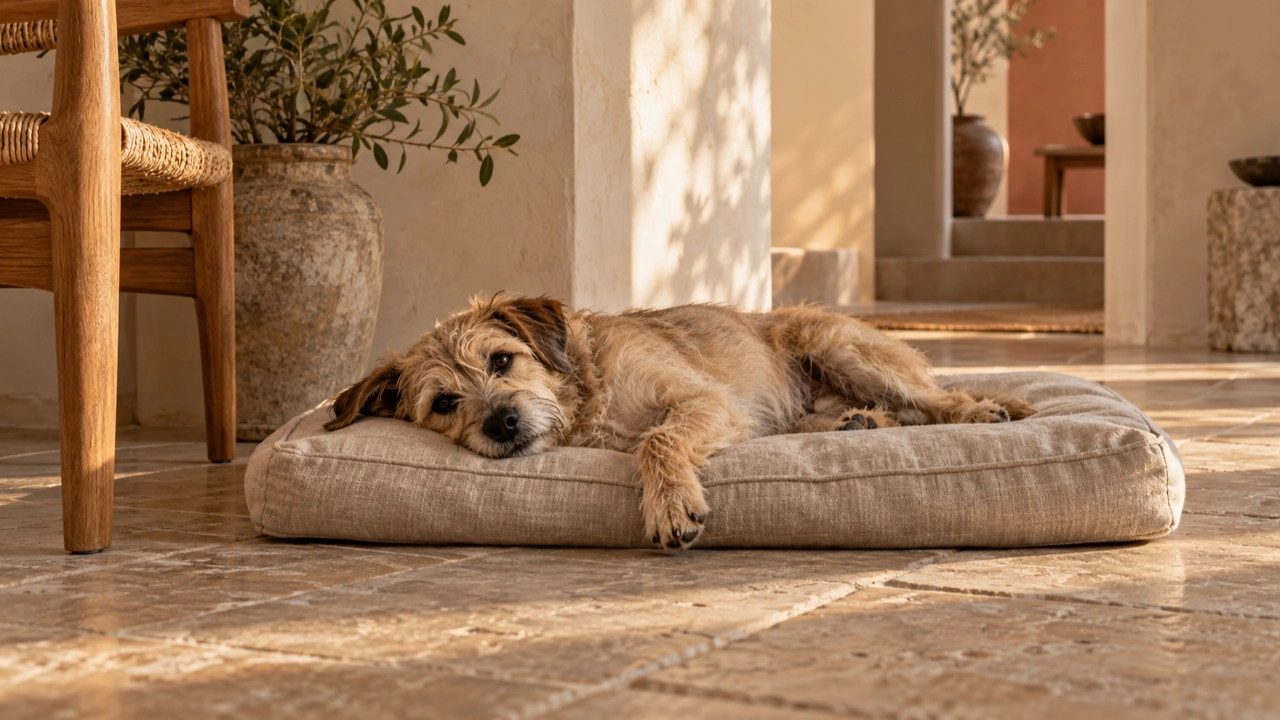
A bed or mat can become an “off” spot: a place where nothing is asked of the dog. Reward voluntary settling there, then let them rest. It is a learned resting cue, not a physical barrier. Do not rely on it to prevent access to hazards while you are away.
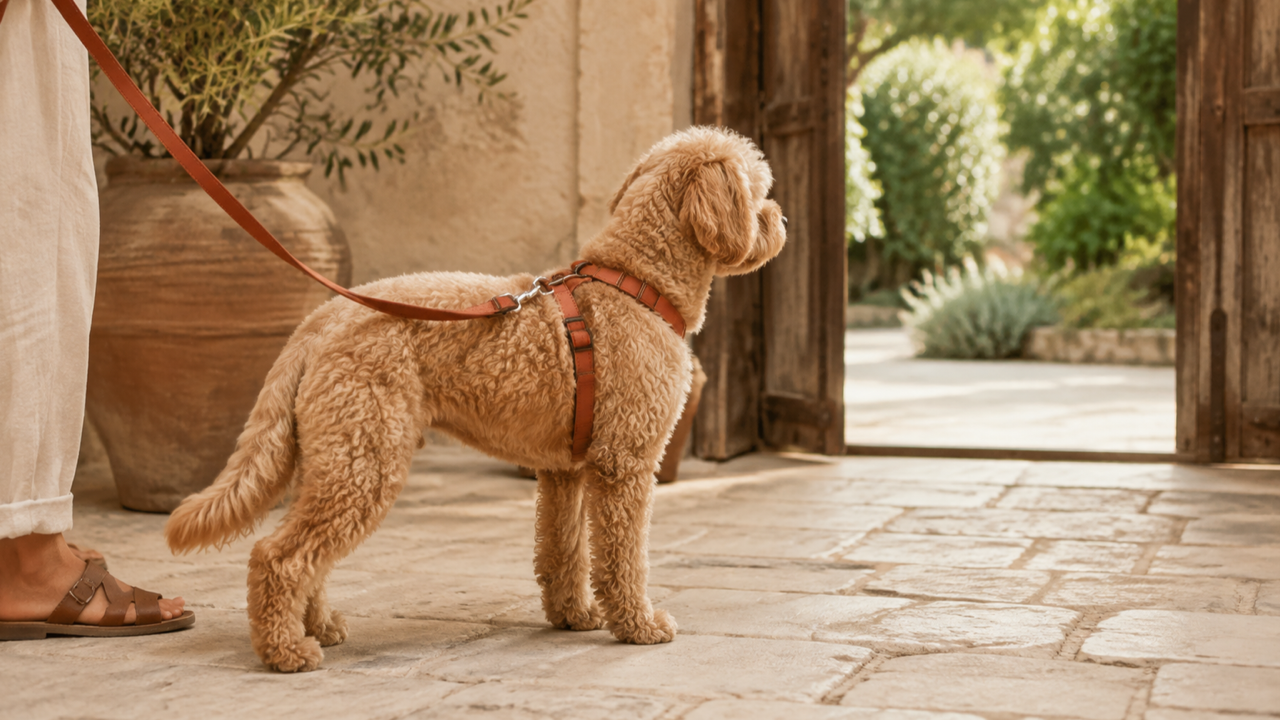
A tethered station is another option only under direct supervision. Use a well-fitting harness, a secure attachment and a clear area where the lead cannot tangle. Reward calm settling and release the dog before frustration builds. Never tether by the neck, leave a tethered dog alone or use it for a dog who struggles against restraint. An open bed is often simpler.
How to choose a dog crate size and position
Measure your dog, not the breed label. Follow the maker’s measuring guide, accounting for height when standing naturally, including upright ears, and body length. Check the internal dimensions rather than the outside measurements. Your dog should be able to stand without crouching, turn around easily and lie in a natural resting position without being cramped.
For a growing puppy, a securely fitted divider may make a larger crate practical. Adjust it as the puppy grows; do not restrict comfortable movement to discourage accidents. If you are unsure, ask the manufacturer or a qualified trainer to check the fit.
Choose sound construction, a secure latch, good ventilation and no sharp edges or gaps that could trap paws. Soft-sided models may not suit dogs who chew or push at the sides. Add a washable mat appropriate to your dog’s chewing habits. Remove collars and harnesses before crating to reduce snagging risks.
Place it like furniture, but judge it like a resting space. Choose a quiet edge of a room, away from direct sun, radiators and draughts, with everyday company nearby. Do not cover ventilation or hide it somewhere isolated simply because it fits the decor. Fresh water should remain available in a safe, stable container.
Introduce it without a deadline
Do I need to crate train? Only if you intend to use a crate, though gentle familiarisation can be useful preparation for future care. Start with the door secured open. Let your dog investigate, reward voluntary approaches and place a few treats inside. Never push, drag or shut them in as they follow food.
Build towards relaxed moments inside with you nearby. Once your dog is comfortable, briefly close the door, reward calm behaviour and reopen it before they become worried. Increase duration gradually. Practise moving away separately; coping with a closed door does not mean coping with being alone.
If your dog becomes distressed, end the session calmly and make the next step easier. Do not wait out panic. Persistent difficulty calls for a qualified reward-based trainer; sudden changes or signs of pain call for a vet. For recovery confinement, follow your vet’s specific plan.
A crate earns its place when the dog can rest comfortably and the household uses it kindly. If a bed, gate or safe room does the job better, choose that. The aim is a settled dog, not a completed equipment list.
Join the Ottimo Plus waitlist for considered dog essentials designed around everyday life together.