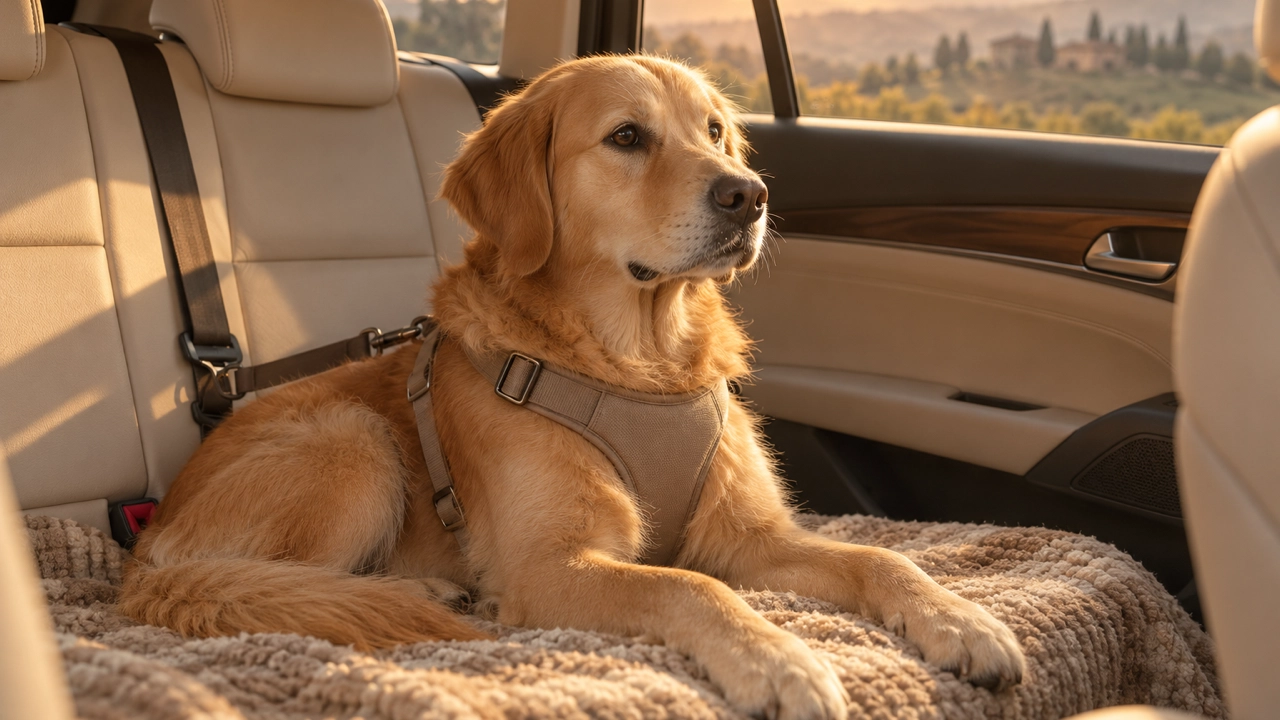
A dog asleep on the back seat can make a journey feel settled. That does not mean the setup is safe. A sudden stop asks something of the restraint that a quiet drive never will.
If you are wondering how to keep a dog safe in the car, start with a suitable restraint, installed exactly as its maker specifies. Then check the space around it, the temperature and how your dog gets in and out. Dog car safety is a routine, not simply an item you buy.
Why a loose dog is a risk
An unrestrained dog can move towards the driver, get into the footwell or distract you at the wrong moment. During sudden braking or a collision, they can be thrown through the cabin and injure themselves or another occupant. Being small, calm or held on someone’s lap does not remove that risk.
Keep your dog away from the driver’s controls and the front passenger airbag. The rear seating area or a suitable enclosed boot space is usually the starting point, but the right position depends on the vehicle and the restraint instructions. Never carry a dog in a closed saloon boot, where they are separated from the passenger cabin without suitable ventilation.
Check the rules where you will drive. A legal requirement to restrain a dog is not proof that every restraint on sale offers the same protection.
Dog car harness vs crate: compare the whole setup
A car harness can suit a dog comfortable on the rear seat. A vehicle crate can give a crate-trained dog a defined resting space. Neither is automatically safer just because of its shape. Construction, crash-test evidence, sizing and installation all matter.
For a harness, look for a model intended for vehicle travel, with published crash-test information for the size you need. An ordinary walking harness with a clip-on seat-belt tether is not equivalent. The harness, connector and vehicle attachment need to work as the tested system; mixing components can change that setup.
For a crate, look for vehicle-specific construction, documented testing and clear anchoring instructions. A household wire crate or soft carrier should not be assumed to provide crash protection. A strong crate left loose in the car is still unsecured cargo.
Treat “crash-tested” as a reason to investigate, not a complete answer. Ask who performed the test, which sizes were tested and whether the equipment met the stated criteria. Independent certification with accessible results is more useful than an unexplained badge. No restraint can promise protection in every collision.
Choose a system that fits your dog and your actual car. If the specified installation is impossible in your vehicle, choose another system rather than inventing an attachment.
Fit the restraint before the first journey
Measure your dog using the manufacturer’s diagram. Check body dimensions and any weight limits rather than buying by breed or a familiar size label. For a crate, follow its sizing guide and make sure your dog can stand, turn and lie comfortably. Do not fill spare space with loose luggage.
Adjust a harness indoors first. Straps should lie flat, buckles should close fully and the chest panel should sit where the fitting guide shows. Our guide to how a dog harness should fit covers everyday comfort checks. A vehicle harness still needs its own instructions; a good walking fit does not establish crash performance.
With the car parked, complete these checks:
- Use only the attachment points and connectors specified for that restraint and vehicle.
- Follow the stated seat-belt routing or anchoring sequence, including any limits on tether length.
- Confirm that your dog can rest without the system allowing access to the driver or a dangerous fall from the seat.
- Check straps, stitching, buckles and anchors for wear, damage or incomplete fastening.
Never attach a car restraint to a neck collar. Avoid improvised clips, extension straps or knots. If instructions are unclear, ask the manufacturer before travelling. Recheck fit as your dog grows or changes shape, and follow replacement guidance after a collision.
Make the boot a secure space
A hatchback or estate boot can offer useful room, but a dog guard and a crash restraint do different jobs. A guard separates the dog from the cabin. It does not necessarily protect the dog from being thrown around within the boot or from impact behind the vehicle.
Look for a vehicle-compatible guard with clear fitting instructions and evidence supporting any safety claims. Do not treat a pressure-fit barrier as equivalent to a structurally mounted, tested system. If using a crate behind the guard, secure it independently according to its instructions. Check with the manufacturers that the combined arrangement is suitable.
Keep heavy bags, tools and other loose objects out of the dog’s space. Secure luggage separately using appropriate vehicle points and luggage restraints. Leave ventilation unobstructed and check that bedding cannot slide into a doorway or interfere with the crate latch.
Keep a lead within reach of the opening. A dog waiting quietly behind a guard can still jump out when the tailgate rises.
Practise the routine while the car is parked
Introduce the restraint without a departure deadline. Let your dog investigate it, then practise short periods settled in the parked car while you stay with them. Keep the environment cool and comfortable. Build towards brief, familiar drives rather than making a long motorway journey the first test.
Before leaving, offer a quiet toilet walk and allow time to settle. Load luggage first so fitting the dog car restraint is not interrupted by bags passing over them. Check the attachment once more before moving off.
Drive smoothly and keep windows closed or only slightly open, without allowing a head or paw outside. If your dog becomes unsettled, stop somewhere safe before adjusting equipment. Reaching back while driving creates another risk. Persistent distress or car sickness deserves veterinary advice, not a tighter restraint.
Plan for stops and temperature
Bring fresh water and a bowl, and make breaks part of the route. Our guide to planning road-trip stops with a dog covers timing and suitable places in detail. Here, the important safety step is the handover from restraint to lead.
Park away from moving traffic where possible. Keep doors controlled, attach the lead before releasing the travel restraint and let your dog out calmly. For a crate, arrange the lead attachment so the dog cannot bolt through an open door. Check the restraint again when you return.
Check the temperature where the dog sits, not only at the dashboard. Sun through rear glass can make their space uncomfortable even when the front feels cool.
Never leave a dog alone in a hot car, even briefly. Shade and slightly open windows do not make it safe. Plan fuel, food and toilet stops so your dog can stay with you; do not rely on unattended air conditioning to solve the problem.
A safer journey begins before the engine starts. Choose a documented restraint, fit it carefully and clear the space around your dog. Then repeat the checks on the ordinary short trips too. Familiarity should make the routine easier, not optional.
Join the Ottimo Plus waitlist for considered dog essentials designed around everyday life together.