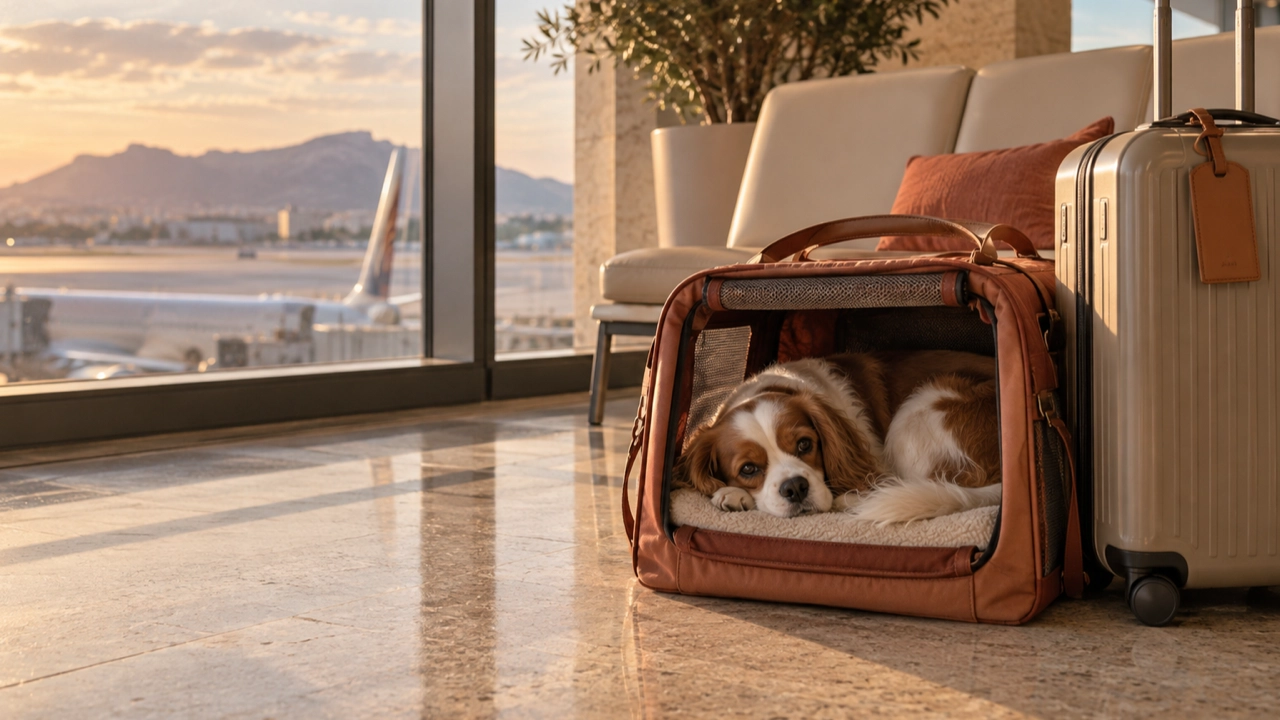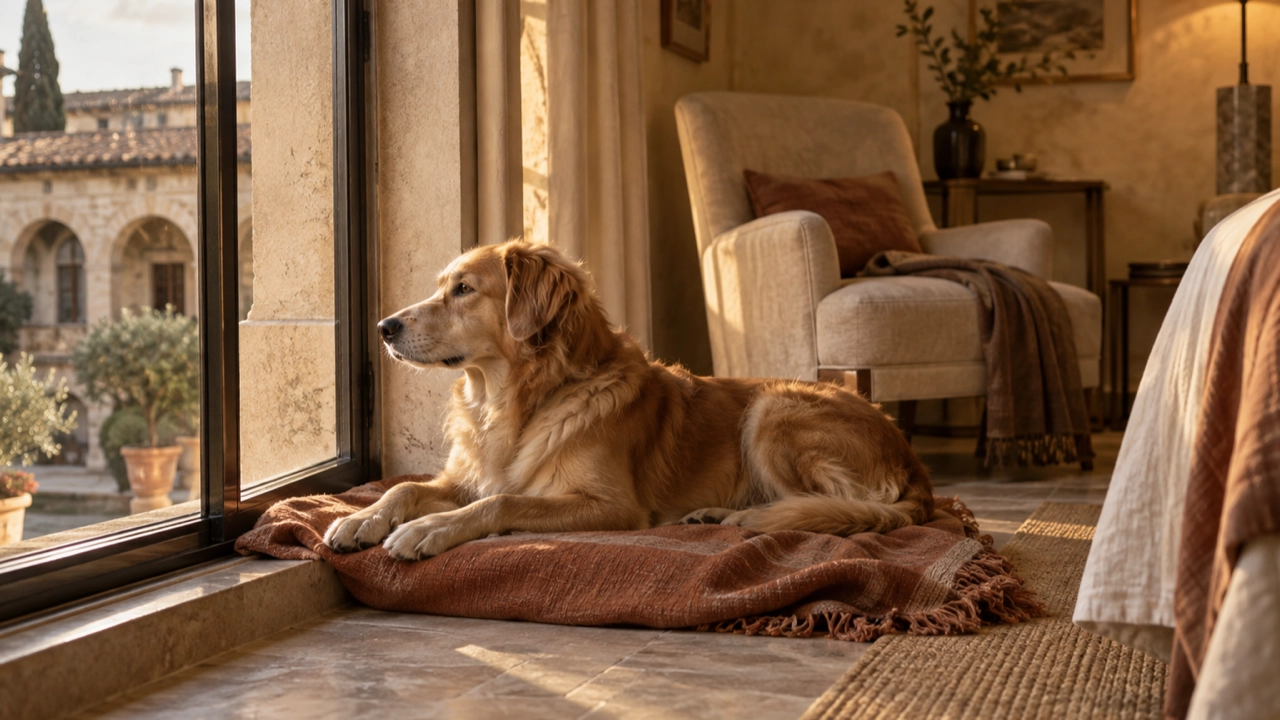
A hotel can say it welcomes dogs and still offer a stay that is difficult for one. The booking page may show a dog on a sofa, while the policy allows dogs only in certain rooms, charges a fee you did not expect, or asks you to take your dog with you every time you leave for dinner.
The answer is not to look for the most enthusiastic “pet-friendly” badge. It is to find out what life at that particular property will be like for your particular dog. A few questions before booking can spare everyone an awkward arrival.
Know what “pet-friendly” means here
Some hotels make room for dogs in the practical sense: straightforward check-in, a clear route outside, and staff who can explain the policy without searching for it. Others merely permit dogs in a limited set of rooms. Both may appear under the same pet-friendly filter.
Neither label guarantees that your dog will be comfortable. A quiet dog may do well at a modest hotel with a useful courtyard. An elaborate welcome hamper will not make up for a room beside a noisy lift. Think of the label as permission to ask better questions, not as an answer.
Policies can change between properties in the same chain. A brand-wide page is a starting point, but the local hotel decides which rooms accept dogs and how its rules work on the ground. Check the individual property’s current policy before paying, especially if the booking is non-refundable.
Ask the property before you book
Call or email the actual hotel, not just a central reservations line. Give them your dog’s size and the dates of your stay, then ask for the details that affect both the price and the daily routine:
- Is the pet fee charged per night or per stay? Is there a separate refundable deposit, and what could lead to a deduction?
- Are there weight or size limits, breed restrictions, or a limit on the number of pets per room?
- Can a dog be left unattended in the room? If so, must they be crated, and are there rules about housekeeping when the dog is present?
- Where may the dog go: lobby, corridors, breakfast room, terrace, restaurant, garden? Is there a route to the outside that avoids restricted areas?
- Is there a designated relief area on the property? Is it accessible outside reception hours?
- Are a bed or bowls provided, or should you bring everything your dog needs?
Ask whether the pet fee and any deposit will appear in your booking total or be collected at check-in. A refundable deposit is not the same thing as a fee; it helps to know which is which before you compare two rooms. Request the policy in writing or save the hotel’s reply so there is no confusion on arrival.
If a rule matters to your stay, ask a direct follow-up. “Dogs are welcome” does not tell you whether yours can sit with you at breakfast, or whether you can step out alone for half an hour. If the answers remain vague, consider another property.
Read reviews written by people with dogs
Overall ratings say little about the experience of bringing a dog. Search reviews for words such as “dog,” “pet fee,” “ground floor,” “lift,” and “walk.” Look for recent accounts that describe how staff handled arrival, where dogs could actually go, and whether the advertised relief area was useful.
Notice repeated friction rather than one unusual complaint. Several mentions of surprise charges, a long walk to the only exit, or barking from neighbouring rooms tell you more than a polished pet-friendly listing. Equally, a review from someone whose dog needed very different conditions from yours may not be decisive. Read for the circumstances behind the opinion.
Check the dates. A change of management or renovation can make older reviews less reliable. Use what you learn to frame one or two questions for the property, rather than treating a review as the final policy.
Choose the room, not just the hotel
The right room makes the first evening easier. Ask whether dog-designated rooms are all on one floor and whether you can request one away from lifts, ice machines, busy corridors, or a street that stays lively late. A lower floor can make frequent trips outside simpler, particularly with a puppy or an older dog, but a room beside the main entrance may bring more passing noise. There is no universally best floor.
Easy-to-clean flooring helps after wet walks; hard floors can also be slippery for some dogs. Ask what the dog rooms are like rather than assuming that the room photographs show the one you will get. A short, simple route to the nearest exit and relief spot often matters more than a view.
Room requests are not always guaranteed. If quiet or ground-floor access is essential, check whether the property can confirm that room type before you commit. If your dog finds shared corridors stressful, describe the problem plainly and ask which available room would minimise it.
Look beyond the front door
Open a map at the hour you would normally take your dog out. Is there a walkable place for a quick toilet break, or would you need to cross a busy road first? Is the nearby green space open early and late? Check local lead rules and any restrictions on parks or beaches rather than taking a green patch on the map as an invitation.
Save the details of a nearby emergency veterinary clinic and confirm its hours and access before you travel. You may never need them. Knowing where to go is still a small, useful piece of preparation. For journeys by car, our guide to planning stops on a road trip with a dog covers the part before you arrive.
Bring the familiar things, then let the room settle
Even when the hotel provides a bed and bowls, bring the items your dog already uses: a familiar bed or blanket, a water bowl, their usual food, and something quiet to occupy them. A hotel bed can be a welcome extra, but it does not smell like home. Keep the essentials accessible so you can set up the room without unpacking every bag first.
On arrival, take your dog outside before asking them to settle indoors. In the room, give them time to investigate while you check for accessible cables, open bins, loose food, and a safe place for their bed. Put water where they can reach it. Close the door securely and keep the lead on until you know the layout and your dog has relaxed.
For the first stretch, stay with them. A short walk, a familiar meal, and a quiet evening often do more than trying to tire a dog out in a new place. If the hotel permits leaving dogs unattended, that does not mean every dog is ready to be left alone there. Listen for corridor noise and watch how your dog responds before making plans that depend on it. If they cannot settle, adjust your plans rather than expecting the room to become familiar at once.
A genuinely dog-friendly hotel is one whose rules, rooms, and surroundings work for the dog travelling with you. Ask for the policy. Picture the first walk and the first night. Book the place that makes both feel uncomplicated.
Join the Ottimo Plus waitlist for considered dog essentials designed around everyday life together.