Flying with a dog in the cabin starts long before the airport. The central question is not whether a pet ticket is available. It is whether your dog can travel safely and comfortably within the airline’s rules.
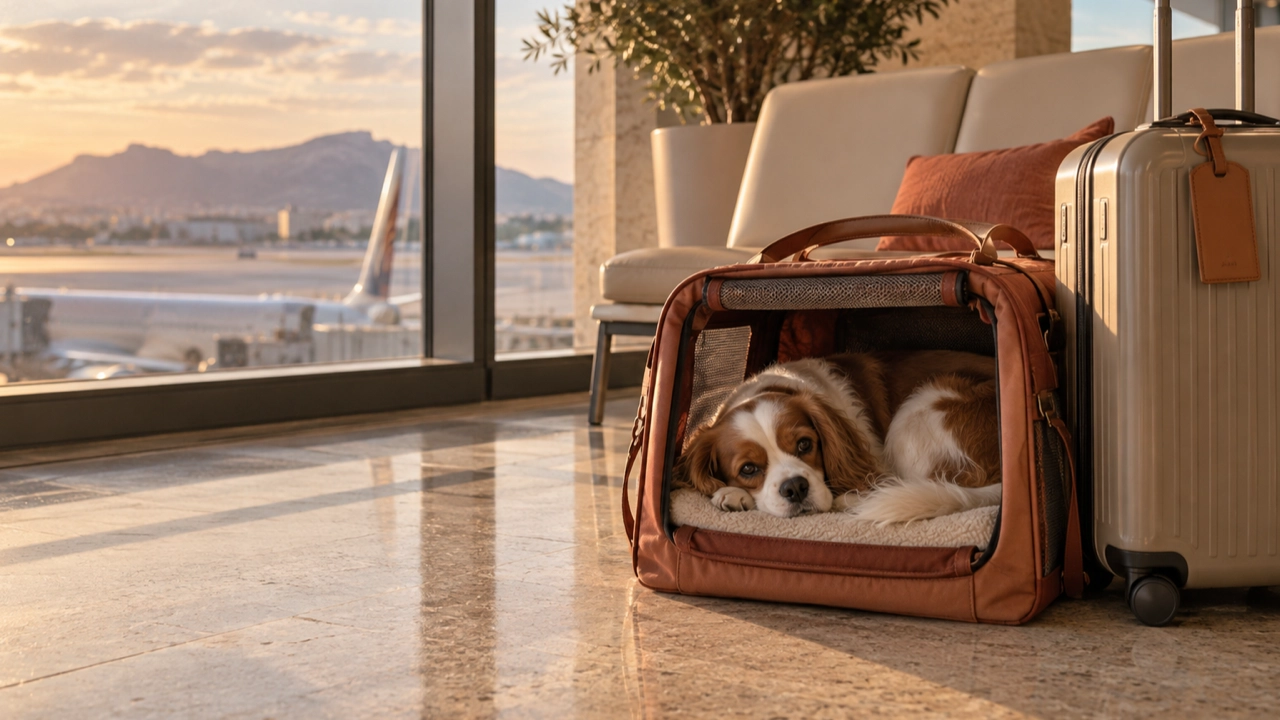
For most airlines, in-cabin pets must remain inside a closed carrier that fits beneath the seat in front of you. That makes the carrier, the dog’s size, and their ability to settle in a confined space more important than the length of the flight alone.
Plan around the strictest part of the journey. Check every operating airline, airport, and border requirement. Then prepare your dog for the experience they will actually have.
First, confirm that your dog qualifies for the cabin
Airline pet policies vary. They can also change by route, aircraft, cabin class, destination, and whether the flight is operated by a partner airline. Read the policy for your exact itinerary before booking.
Confirm the following directly with the airline:
- Whether pets are accepted in the cabin on your route.
- The permitted species, age, and number of pets per traveller.
- The maximum carrier dimensions and any weight limit.
- Whether the limit applies to the dog alone or the dog and carrier together.
- Which seats or cabin classes cannot accommodate a carrier.
- The pet fee and how to reserve one of the limited pet places.
- The documents required at departure, connection, and arrival.
Do not rely on a general search result or an old travel forum. A carrier described as “airline approved” is not approved for every aircraft. Compare its external measurements with the airline’s current allowance, then ask about the under-seat space on the aircraft scheduled for your flight.
Your dog should be able to fit in the carrier in the position the airline requires. If that is not possible without crowding or forcing the carrier out of shape, cabin travel is not the right option for that itinerary.
Choose the carrier, then make it familiar
An airline pet carrier needs to satisfy two different standards. It must meet the airline’s rules and work as a calm, secure place for your dog.
Look for a carrier with reliable closures, ventilation on several sides, a leak-resistant base, and enough structure to protect the dog without becoming rigid and bulky. Soft-sided carriers often fit under seats more easily, but they should not collapse onto the dog. Check the condition of every zip, seam, handle, and attachment point before travel.
Add an absorbent liner and a thin familiar layer if space permits. Avoid filling the carrier with loose objects. Nothing inside should restrict ventilation or become a hazard when the bag is moved.
Introduce the carrier at home well before departure. Leave it open in a quiet room. Place familiar bedding inside and let your dog enter without being pushed. Feed a few meals or offer calm rewards near it, then inside it. Build towards closing the door briefly, carrying the bag, and resting with it beneath a chair.
The final practice should resemble the flight. Your dog needs to settle with the carrier closed, around ordinary movement and sound, for gradually longer periods. A first successful nap in the carrier is more useful than a rushed hour of confinement.
Understand cabin travel versus cargo
The difference between a dog in cabin versus cargo is not simply distance from you. The handling process, environment, eligibility rules, and risks are different.
In the cabin, an eligible dog travels in an under-seat carrier and usually stays inside it for the flight. You can observe them, but you have little space and limited ability to intervene. Cabin noise, pressure changes, unfamiliar smells, and long periods in the carrier can still be demanding.
Larger dogs that do not qualify for the cabin may travel through an airline’s pet transport or cargo programme, where available. Requirements vary widely. Some airlines do not carry pets in cargo at all. Temperature restrictions, crate specifications, seasonal embargoes, breed restrictions, and route limitations may apply.
Cargo is not a default solution when the cabin does not work. Ask the airline exactly how animals are accepted, handled, transferred, monitored, and collected. Discuss the individual journey with your veterinarian. For some dogs and routes, travelling by air may not be an appropriate choice in either part of the aircraft.
Prepare the paperwork and airport routine
Start with the destination’s official entry requirements, especially for international travel. Vaccination records, microchip details, health certificates, permits, parasite treatments, or endorsed documents may be required within specific time windows. Connections can add another set of rules.
Ask your veterinarian what your dog needs and when each step must happen. Keep original documents together and carry accessible copies. Check the airline’s requirements separately; they may differ from the legal minimum at your destination.
On the day, arrive with enough time to resolve the pet check-in without creating a long, restless wait at the gate. Give your dog a calm walk and toilet opportunity before entering the terminal. Locate pet relief areas in advance, including options after security and near any connecting gate.
Security procedures depend on the country and airport. In the United States, the usual process involves removing the dog while the empty carrier is screened. The dog then goes through the checkpoint with you under the officers’ direction. Use a well-fitted harness and lead before opening the carrier. If there is a meaningful escape risk, ask whether a private screening room is available.
Never open the carrier in a busy terminal without first securing your dog. The sounds and movement that seem ordinary to you may feel very different at floor level.
Keep the flight calm and measured
Choose the simplest itinerary you reasonably can. Fewer connections mean fewer security transitions, gate changes, relief-area searches, and chances for delay. A direct flight at a quieter or cooler time of day can make the routine easier.
Before boarding, offer water and a final toilet break without encouraging frantic exercise. Keep food timing close to your dog’s normal routine unless your veterinarian advises otherwise. Do not introduce a large meal, unfamiliar calming product, or medication on departure day. Ask your vet before using anything intended to sedate or calm your dog.
On board, place the carrier where the crew directs and keep the ventilation panels clear. Avoid repeatedly opening, shifting, or reaching into it. Your calm presence, a familiar scent, and a carrier that has already become ordinary are more useful than constant attention.
Offer water in a controlled way when airline rules and the situation allow. A small amount that your dog can drink without soaking the carrier is more practical than an overfilled bowl. Pack water, an absorbent spare liner, waste bags, and a small cloth where you can reach them without opening the overhead locker.
Watch for persistent panting unrelated to warmth, heavy drooling, repeated escape attempts, vomiting, weakness, or difficulty breathing. Tell the cabin crew if you are concerned. If your dog has existing health, breathing, mobility, or anxiety concerns, ask your veterinarian about flying before you book.
Know when not to fly
Some dogs can fit beneath a seat but should not be asked to spend hours there. A dog who cannot settle in a closed carrier at home is unlikely to find it easier in an airport. Repeated panic during practice is a reason to pause, not a stage to push through.
Consider another plan if the itinerary is complex, the weather creates handling restrictions, the dog is unwell, or the destination rules add disproportionate strain. Very young, elderly, pregnant, or medically vulnerable dogs need individual veterinary guidance. Dogs with breathing difficulties require particular care when air travel is being considered.
Driving or rail may offer more space and more control over breaks, depending on the route. Our guide to preparing a dog for public transport explains how to build familiarity with stations and shared travel in smaller steps. If driving is the better option, plan the rhythm with regular road-trip breaks.
The best flight plan is not the one that gets a dog on board at any cost. It is the one built around eligibility, preparation, and an honest reading of the dog in front of you.
Join the Ottimo Plus waitlist for considered dog essentials designed around everyday life together.