A dog who starts drooling the moment the car keys appear is not being dramatic. Car sickness is common, especially in puppies, and it is often made worse by the anticipation of feeling unwell. The good news is that most dogs can be helped — not with a single product, but with a calmer routine and a little patience.
If you are wondering how to stop a dog getting car sick, start by working out what is actually happening. Motion sickness and travel anxiety look similar from the passenger seat, and many dogs experience both at once.
Motion sickness or travel anxiety?
Motion sickness comes from the balance system in the inner ear, which is still maturing in young dogs. The movement of the car sends conflicting signals, and the result is nausea. Puppies often grow out of it as their inner ear develops, but a dog who repeatedly feels sick can learn to associate the car with feeling awful.
That is where travel anxiety begins. A dog may start to pant, whine or refuse to get in long before the wheels turn. The two problems feed each other: nausea creates anxiety, and anxiety makes nausea worse. Treating only one rarely solves the whole picture.
The signs to watch for
Early signs are easy to miss. Watch for drooling, lip-licking, yawning, restlessness, whining or a sudden reluctance to settle. Some dogs go quiet and still; others pace. Vomiting is the obvious sign, but it is usually the last one, not the first.
Notice when the signs start. A dog who is uneasy before the engine starts is showing anticipation. A dog who is fine until the car moves, then drools or vomits, is more likely reacting to motion. Many dogs show a mix, and the pattern is more useful than any single symptom.
Prepare before the journey
A calm journey begins before your dog gets in the car. Walk them first so they have emptied and had a little exercise, then give them time to settle. Avoid a heavy meal immediately before travel; a light snack a couple of hours earlier suits most dogs better than a full stomach. Fresh water is fine, but do not encourage a large drink just before you leave.
Make the car cool and well ventilated. Open a window a few centimetres for fresh air, but never far enough for a head or paw to go outside. Remove loose items from the dog’s space so nothing slides or rattles.
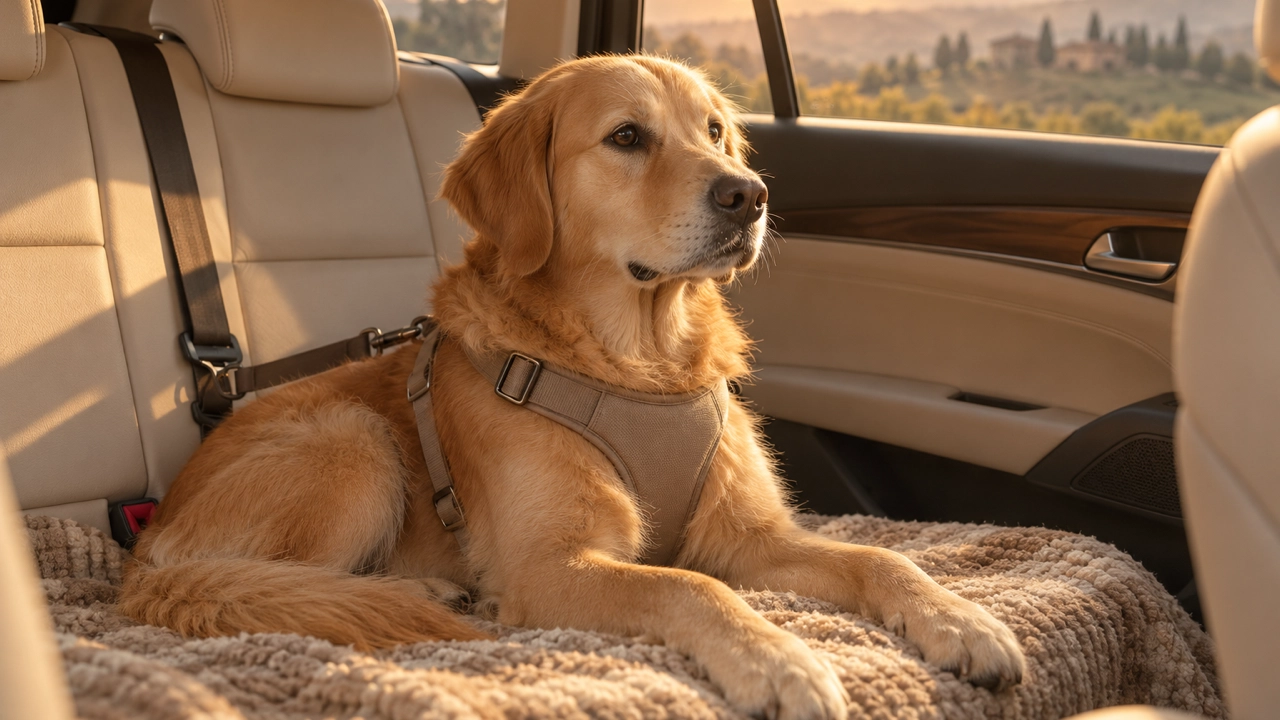
Use a suitable restraint. A crash-tested harness or a secured crate gives a dog something stable to lean against and stops them being thrown around, which is both a safety and a comfort issue. Our guide to keeping a dog safe in the car covers choosing and fitting one properly.
Settle the dog in the car
Familiarity helps. Bring a blanket or bed your dog already likes, and make sure the surface under them does not slip. A dog who is bracing against a sliding seat is working harder than one who feels secure.
Where possible, let your dog face forward and sit low rather than looking sideways out of the window. For small dogs, a secured booster seat can help; for larger dogs, the rear seat or a ventilated boot is usually more comfortable. Keep the temperature cool and the radio low.
Do not feed during the journey. A small amount of water at a stop is fine, but a full meal or a handful of treats in a moving car is more likely to come back up. Save the rewards for the moments when the car is stationary.
Build tolerance with short trips
The most reliable long-term fix is to teach the dog that the car is ordinary. That means short, boring, positive trips — not a long motorway run on the first attempt.
Start with the car parked. Let your dog get in, settle for a moment, and get out again. Repeat over a few days. Then try the engine on, still parked. Then a drive of a minute or two, ending somewhere pleasant or back home. Build up gradually, and stop while your dog is still comfortable rather than pushing to the point of nausea.
Avoid making every journey end at the vet. If the only trips your dog takes are to a place they dislike, the car becomes a warning. Mix in short drives to a park, a friend’s house or a quiet café. The destination matters less than the pattern.
Make the drive itself easier
Smooth driving does more than most products. Accelerate gently, brake early and take corners slowly. A dog who is thrown around will feel worse, whatever else you do. On longer routes, plan breaks before your dog needs them; our guide to planning road-trip stops covers timing and safe places to stop.
Keep the cabin calm. Loud music, sudden movements and reaching back while driving all add stress. If your dog becomes distressed, stop somewhere safe and let them recover before continuing.
When to ask your vet
Car sickness is common, but it is worth ruling out other causes. Ear infections, pain and some medical conditions can make a dog reluctant to travel or unwell in the car. Speak to your vet if the signs are severe, if your dog is vomiting repeatedly, or if a previously settled dog suddenly changes.
There are prescription anti-sickness medications that can help in the short term while you work on travel training. They are not a substitute for the training itself, and human medicines are not appropriate. Ask your vet rather than experimenting.
A calmer car, one short trip at a time
Car sickness rarely disappears overnight, and it is not a failure if progress is slow. Most dogs improve with a cool car, a secure spot, a familiar blanket and a routine that never asks too much too soon.
The aim is not a perfect journey. It is a dog who gets in without dread, settles, and arrives ready for the walk at the other end. That is built gradually — and it is worth the patience.