Public transport can open up a city, a day out, or a weekend away with your dog. It can also bring unfamiliar sounds, tight spaces, moving floors, crowds, and rules you cannot control.
The aim is not to make every dog enjoy every journey. It is to build enough familiarity that your dog can stay safe, comfortable, and responsive while you travel together. Start with the environment, practise in small steps, and let your dog’s behaviour set the pace.
Check the rules before you train
Public transport is not one universal experience. A local bus may have different requirements from a regional train, and rules can vary between operators or routes. Check whether dogs must be in a carrier, whether they can travel on a lead, where they may sit, and whether there are restrictions at particular times.
Look at the rules for the whole journey, including stations, platforms, transfers, and the final walk. Save the relevant page or screenshot the key details. If your route crosses a border or changes operator, check each section rather than assuming the first policy applies throughout.
Training cannot compensate for a rule that makes a journey unsuitable. If your dog is large, nervous, unwell, or unable to travel in the required way, choose a different route or mode of transport. A practical plan starts with an honest assessment of what the journey asks from both of you.
Learn what calm looks like at home
Before visiting a station, notice your dog’s baseline. Can they settle on a mat while you move around the room? Will they take a familiar treat, respond to their name, and walk with you when something interesting is nearby? Do they recover quickly after a knock at the door or a delivery passing outside?
These are useful reference points. A dog who is relaxed at home but cannot eat or respond beside a busy road may need more preparation before boarding. A dog who can settle in several everyday places may be ready for a shorter step.
Practise the simple pieces first:
- Walk calmly in a harness or collar and lead that fit correctly.
- Wait beside you without weaving around your feet.
- Follow a hand target or quiet cue through a doorway.
- Settle on a small mat or towel for a few minutes.
- Accept gentle handling of paws and body if the journey requires a lift or a carrier.
Keep sessions brief and finish while your dog is still coping well. The point is confidence, not endurance.
Introduce the setting without boarding
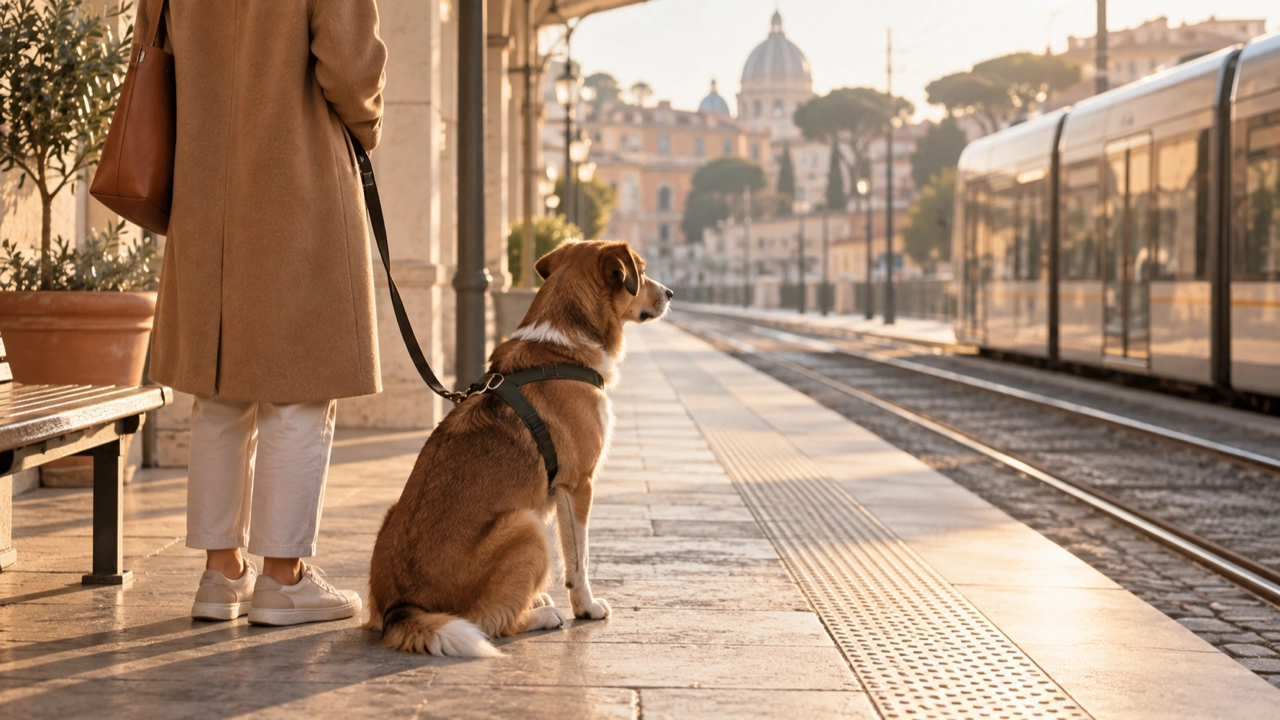
Choose a quiet time and visit the station, stop, or entrance without planning to travel. Stand far enough away that your dog can look around and still respond to you. Let them observe people, vehicles, announcements, doors, and movement without being pulled towards every new thing.
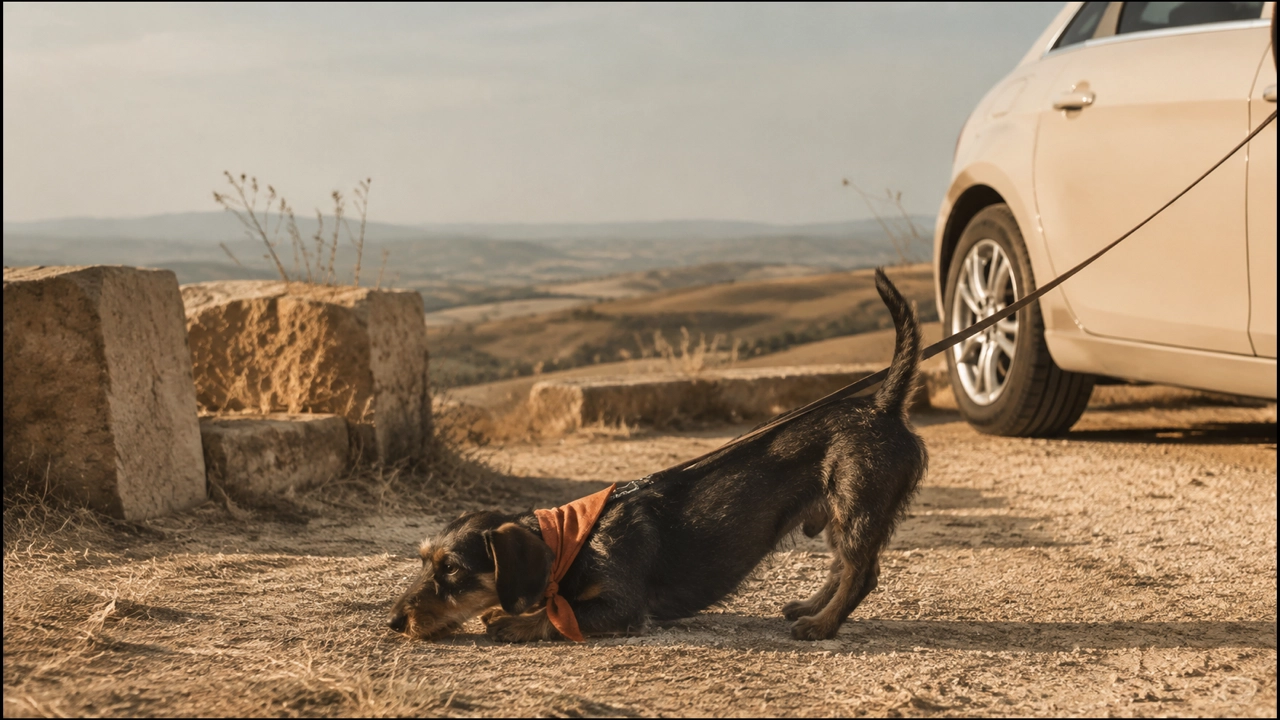
Reward soft attention and relaxed body language. A loose lead, a normal pace of breathing, and the ability to look away from a distraction are all useful signs. If your dog freezes, lunges, hides, pants heavily, or stops responding, increase the distance or leave. A shorter visit that ends well is more valuable than staying until your dog is overwhelmed.
Return another day and repeat the same step before making it harder. You can gradually move closer to the platform or stop, stand near a bench, or watch a vehicle arrive and leave. Do not add crowds, a long wait, and boarding all at once.
Make the vehicle familiar in small pieces
Once the setting is manageable, introduce the movement. Begin with the least demanding version available. That might be standing near a stationary bus, walking past a train, or sitting on a quiet platform while one arrives. Give your dog space to watch the vehicle without asking them to approach it immediately.
If your dog remains comfortable, practise the sequence around boarding:
- Walk towards the entrance and pause.
- Move away and repeat until the doorway is unremarkable.
- Step on when the vehicle is stationary, if the rules and staff allow it.
- Stand or sit briefly, then leave before your dog becomes uneasy.
- Repeat on another quiet day before attempting a short ride.
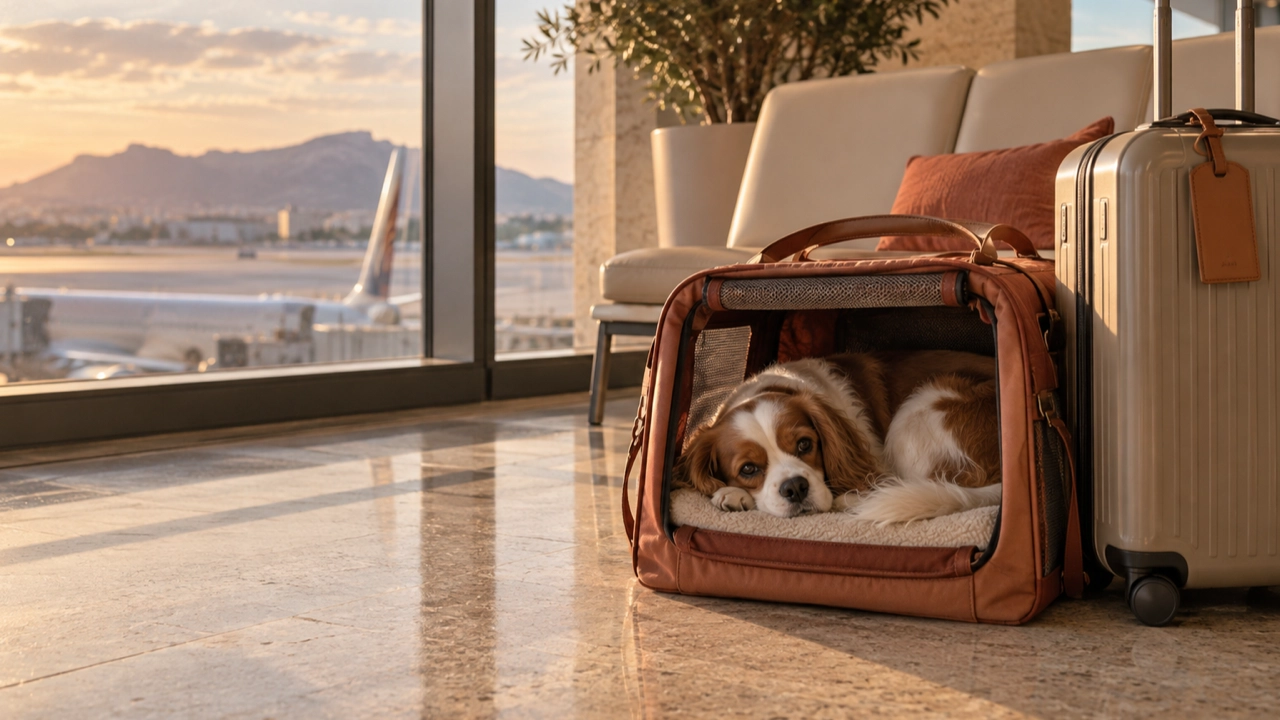
Some dogs need a carrier to feel secure; others need room to stand beside their person. Use the arrangement required by the operator and make it familiar at home first. A carrier can stay open in a quiet room with bedding inside, while a dog travelling on lead can practise settling beside your feet. Never introduce a new restraint or carrier for the first time at a busy stop.
Take the first journey somewhere easy
Choose a short route with a simple exit and a destination where your dog can decompress. Avoid making the first trip a time-critical appointment. Leave room for a missed vehicle, a quieter platform, or a decision to go home.
Before leaving, give your dog a calm opportunity to toilet and move without trying to exhaust them. Pack water, waste bags, a familiar mat or towel, any required carrier, and a small amount of food if your dog normally takes it when travelling. Keep essentials accessible. This guide to dog travel gear that actually gets used is a useful filter when deciding what deserves space.
Board during a quieter period if possible. Choose a position that keeps your dog away from doors, steps, and the busiest flow of passengers. Follow the operator’s instructions and give other passengers room. Your dog does not need to greet anyone. Calmly watching the world pass is enough.
If your dog begins to struggle, get off at a safe stop and reset. Ending early is information, not failure. The next practice can be shorter, quieter, or simply return to the platform stage.
Watch the dog, not the itinerary
Stress can look like agitation, but it can also look very still. Watch for repeated yawning, lip licking, tucked posture, trembling, panting unrelated to heat, drooling, vocalising, escape attempts, or an inability to take familiar food. One sign does not explain everything, but a cluster or a clear change from your dog’s normal behaviour deserves attention.
Notice recovery as well. After leaving the vehicle, can your dog sniff, drink, walk, and respond to you? If they remain distressed, give them time in a quiet place and reconsider the plan. A dog who repeatedly panics on transport may need help from a qualified behaviour professional or veterinarian rather than more exposure.
Do not use medication, calming products, or restrictive equipment without appropriate professional guidance. The right support depends on the individual dog and the journey.
Build up one variable at a time
When a short ride goes well, change only one part of the next journey. Travel a little farther, choose a busier time, add a transfer, or visit a less familiar destination. Keep the other elements easy.
It helps to write down what worked: the time, route, waiting period, vehicle, position, and your dog’s recovery afterwards. Patterns emerge quickly. You may find that your dog handles a moving train well but struggles with a crowded platform, or that a morning journey is easier than an evening one.
Public transport becomes more manageable when each trip has a clear purpose. Sometimes the best choice is a real journey. Sometimes it is a ten-minute visit to a quiet stop and home again. Prepare carefully, leave room to change plans, and let comfort decide how far you go.
Join the Ottimo Plus waitlist for considered dog essentials designed around everyday life together.