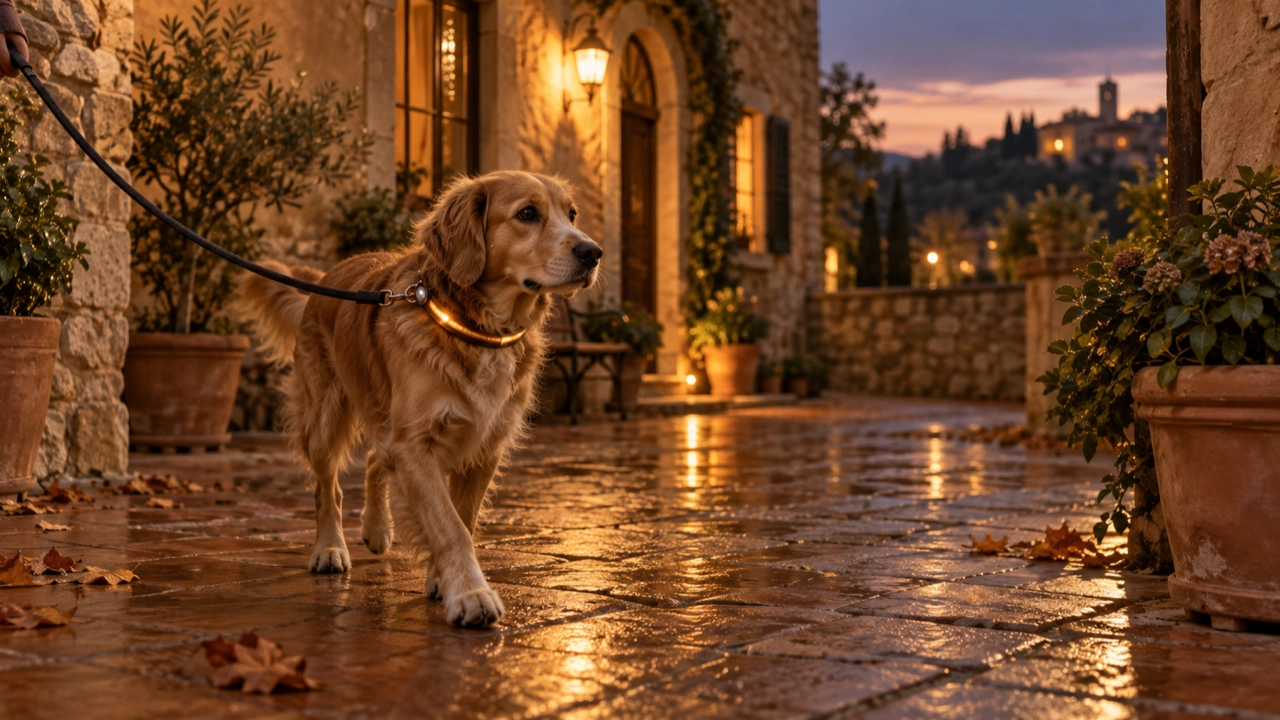
A walk can become a negotiation before you reach the end of the street. Your dog leans into the lead. You follow, shorten your grip and arrive at the park with a tired shoulder.
If you are asking why does my dog pull on the lead, start with what pulling achieves. It often gets a dog to the next smell, tree or greeting. Teaching something different means making a loose lead useful, while noticing when excitement or worry makes learning difficult.
Why pulling becomes a habit
Dogs do not arrive knowing how to match a person’s walking pace. The world ahead is interesting, and walking on four legs often means moving faster than we do. If a tight lead still takes them where they want to go, pulling works. Repeating that result builds a habit.
Excitement is not the only explanation. A dog may pull towards another dog because they want to greet them, or away because they feel unsafe. A busy pavement can be overwhelming. A familiar route may mean rushing towards a favourite field.
Watch the whole dog. A loose body and curious nose suggest a different situation from a tense body, repeated scanning or attempts to escape. These clues are not a diagnosis, but they help you choose between practising and finding more space. Pulling is not proof of stubbornness or a wish to be in charge.
Make a loose lead the way forward
The core rule: a tight lead never earns forward movement. When it tightens, stop rather than letting your dog tow you towards the thing they want. When it softens, walking can resume.
This is a training rule, not a reason to stand beside a hazard. If your dog is frightened or you are near traffic, move to safety first. Choose a quieter place for practice rather than insisting on the lesson there.
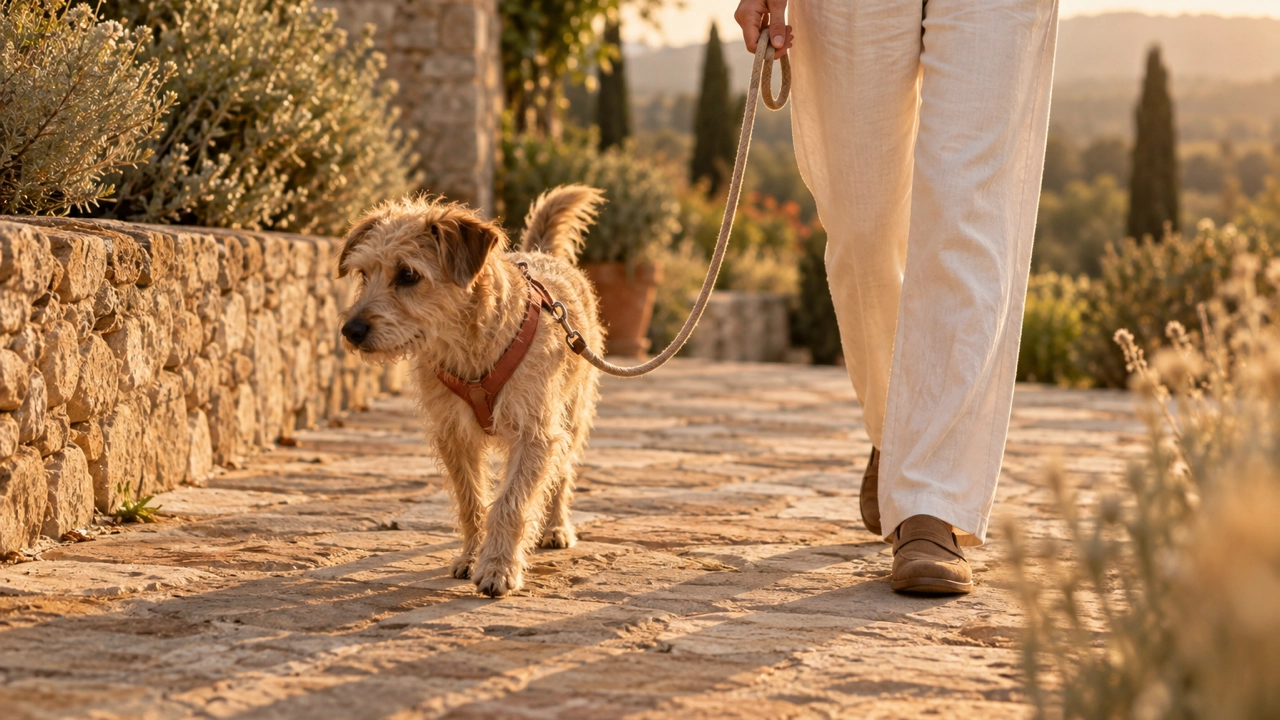
Loose-lead walking does not mean a formal heel. Your dog can be slightly ahead, beside you or sniffing within reach, provided the lead stays slack. Decide what works for your route and use the same approach across the household. Holding the lead permanently short and tight leaves little opportunity to get it right.
Stop and wait: be a tree
Begin on a quiet path with small treats your dog likes. Allow enough lead for a relaxed curve, without giving access to the road or wrapping it around your hand.
Take a few steps. As soon as the lead tightens, stop your feet and keep your hands still. Do not jerk the lead, drag your dog back or repeat their name. Wait for them to turn towards you or shift back enough to release the tension.
The moment the lead becomes slack, say a brief marker such as “yes”. Reward beside your leg, then move again. At first, one or two loose steps may be enough to earn another reward. Notice those steps before pulling starts.
If your dog stands straining and cannot disengage, do not turn it into a prolonged contest. The setting may be too difficult. Invite them towards a quieter spot with a cheerful cue and reward their response. Reset with an easier stretch. Keep practice brief enough that both of you can stay patient.
Change direction without a tug
Gentle direction changes can help a dog notice where you are going instead of fixing on what lies ahead. Practise them while the lead is still loose, in an open space away from traffic.
Say “this way”, turn and take a few steps in another direction. Mark and reward when your dog follows. A curve is often easier than an abrupt turn. The cue should become an invitation to move with you, not a warning that a correction is coming.
If the lead is already tight, stop first and invite your dog back towards you. Do not spin round and pull them after you. Changing direction works best when following you is rewarding, not when the dog is physically forced to catch up.
Reward the position you want
Give treats where you want your dog to walk: low beside your leg, on the side you have chosen. Feeding out in front can draw them forwards again. Keep your hand relaxed between rewards rather than holding food permanently against their nose.
Reward check-ins, slack lead and matching your pace. Do not wait until your dog pulls and returns every time. Otherwise, you may teach a repeated sequence of pulling, coming back and collecting food.
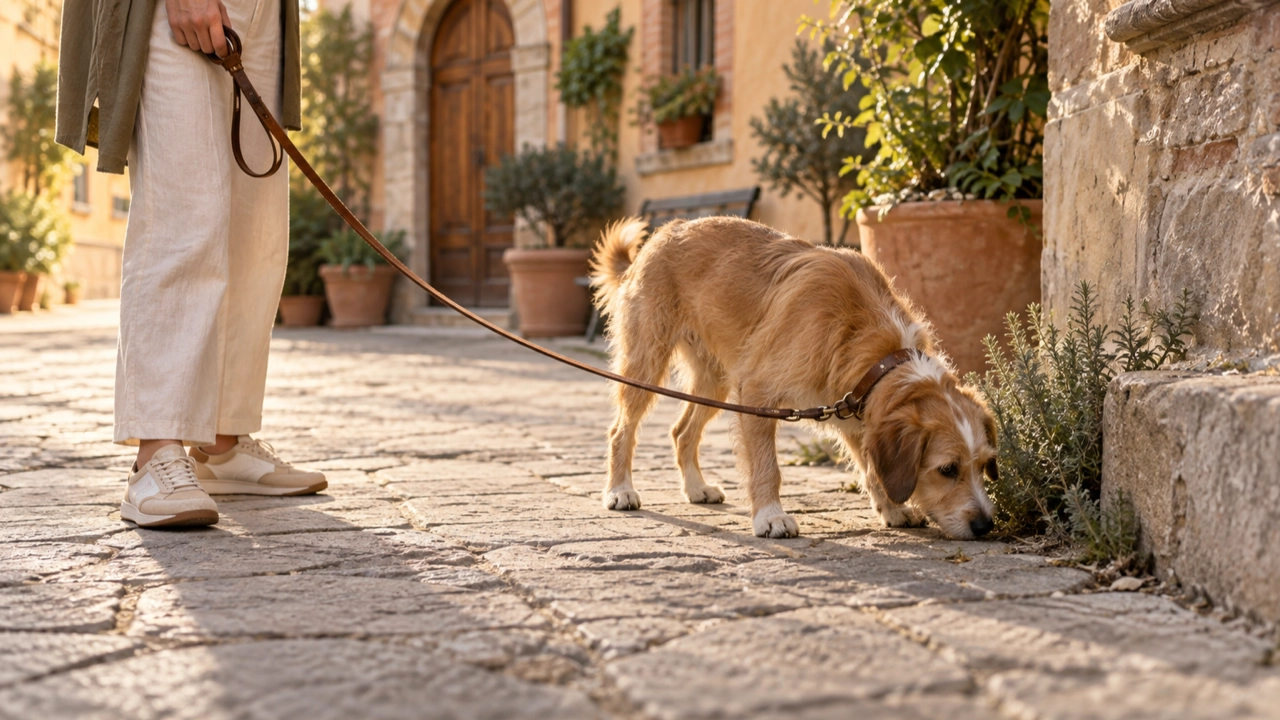
Sniffing can be a reward too. Walk a few loose steps towards a safe patch of grass, then give a release cue such as “go sniff”. A walk needs room for exploration, not constant attention to you. Our guide to why dogs stop to sniff on walks explains why those pauses matter. Stopping to investigate is not the same problem as towing you there.
Start where your dog can succeed
Loose lead walking training is easier in a familiar, quiet place than outside a busy park gate. Begin indoors or in a quiet outdoor space, then practise on short stretches of a familiar route.
Increase one challenge at a time: a longer stretch, a new location or a distraction farther away. If your dog pulls repeatedly or stops responding to an easy cue, reduce the challenge. Add distance from other dogs or choose a quieter time. Refusing a normally welcome treat can be a reason to pause, though food interest alone does not tell you how a dog feels.
Keep toilet walks and exploration possible while training develops. Choose easier routes, allow sniffing breaks and avoid walks where rushing is unavoidable. Ask other walkers in the household to reward the same loose-lead behaviour.
Choose equipment for comfort, not correction
A well-fitted harness can make practice more comfortable. A front-clip harness may help you guide a strong dog, but it does not teach the skill by itself. Check that the fit allows normal movement and that the lead does not catch around the front legs. Our guide to how a dog harness should fit covers the checks to make before walking.
A headcollar needs a slow, kind introduction. Let your dog investigate it and build comfortable, rewarded wearing time before attaching a lead. Never jerk it or use it to stop a dog suddenly at speed. Follow fitting instructions and ask a qualified trainer for help if your dog paws at it or resists wearing it.
Avoid choke chains, prong collars, electric collars and lead corrections. Pain or intimidation does not explain the behaviour you want, and can add worry to an already difficult walk. Equipment should support safe practice, not replace it.
Expect progress, not a fixed deadline
Some dogs begin offering loose steps within a few sessions. Reliable walking through distractions can take weeks or months, especially when pulling has worked for years. Measure progress by easier stretches and quicker recovery, not a perfect walk every time.
Get a qualified reward-based trainer if pulling is hard to manage safely, your dog lunges or seems frightened, or consistent practice leaves you stuck. Ask how they teach and what equipment they use. Look for someone who observes your dog and explains a gradual plan without pain, intimidation or guaranteed quick fixes.
If pulling changes suddenly alongside signs of discomfort, pause training and contact your vet rather than treating it as disobedience.
Calmer walks come from small, repeatable choices. Stop before pulling pays, reward the loose steps and leave time for your dog to be a dog.
Join the Ottimo Plus waitlist for considered dog essentials designed around everyday life together.