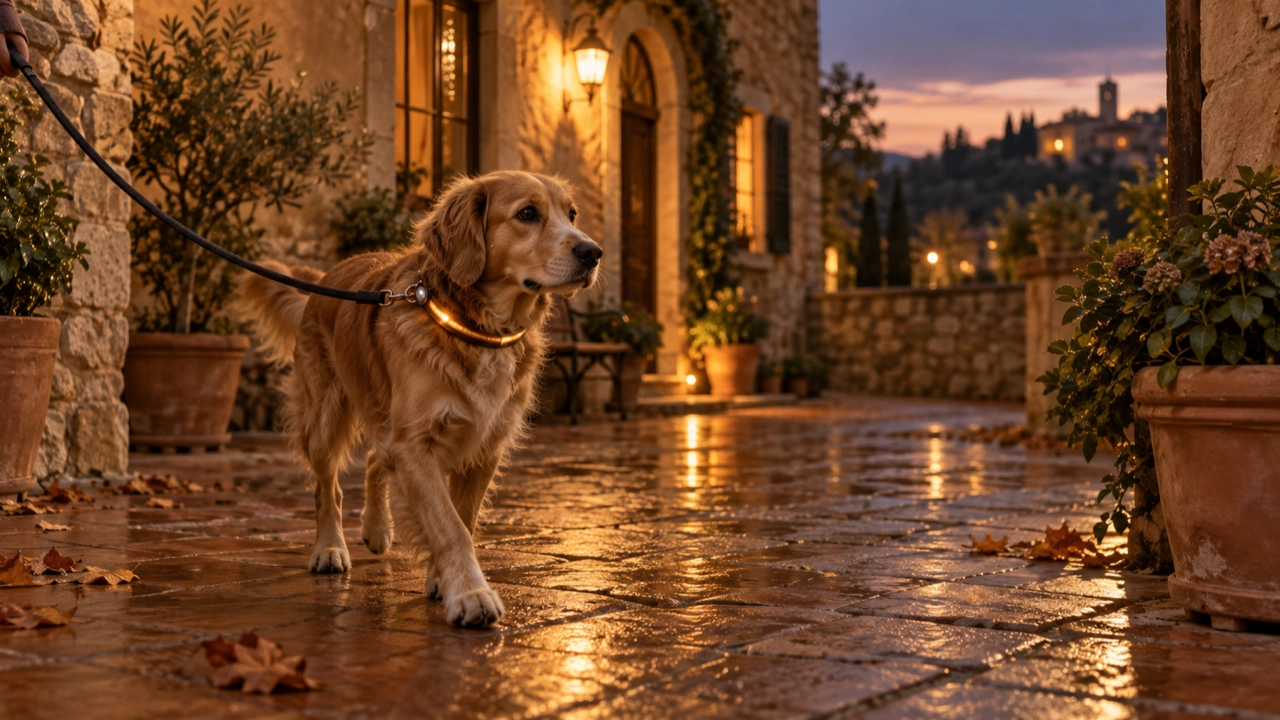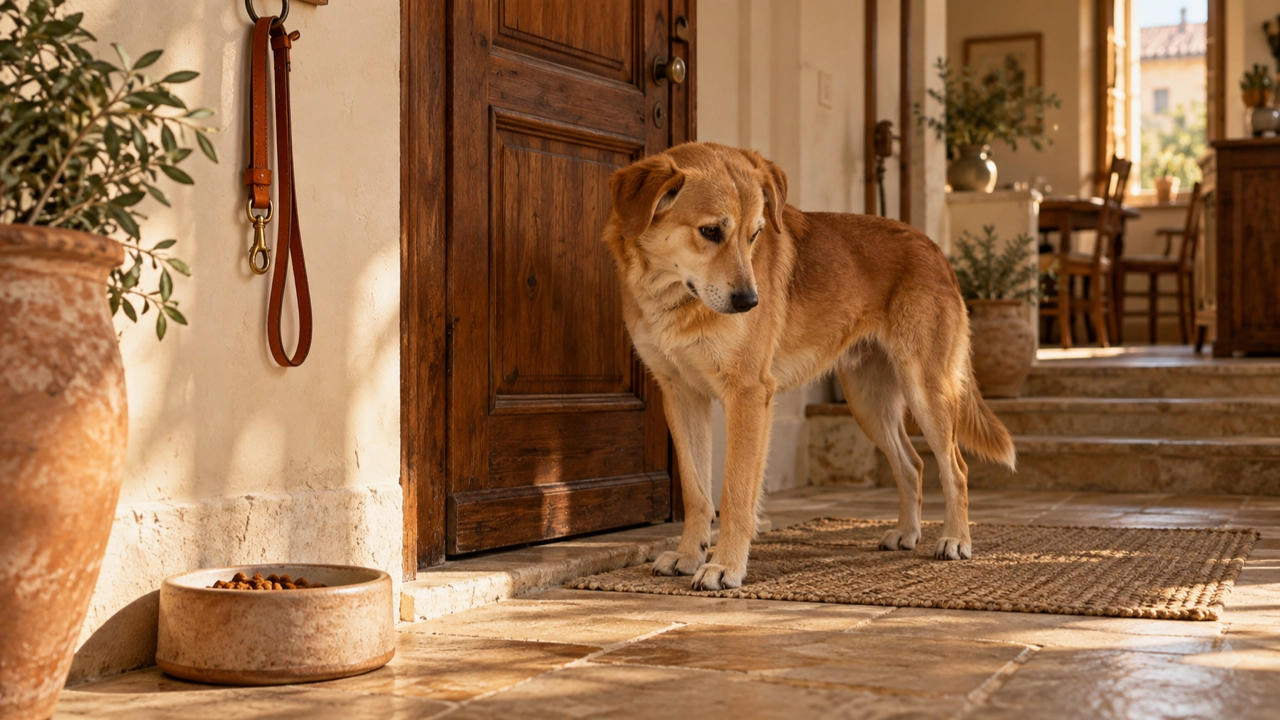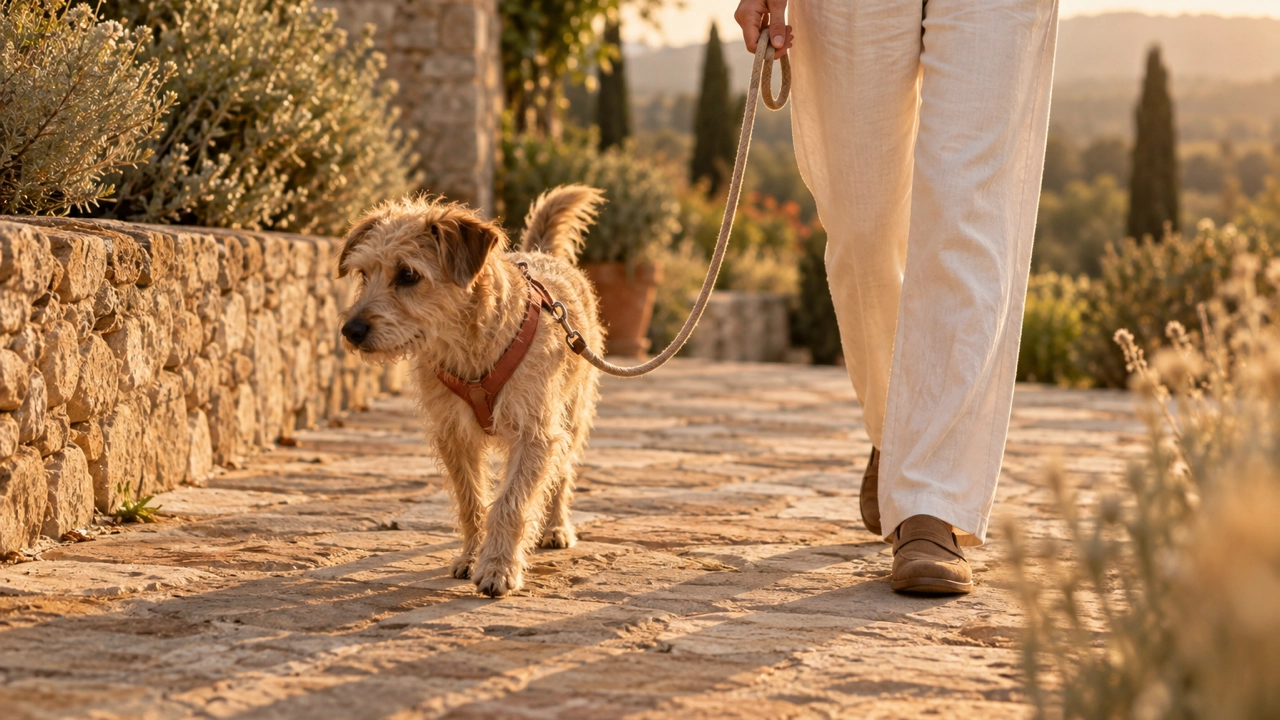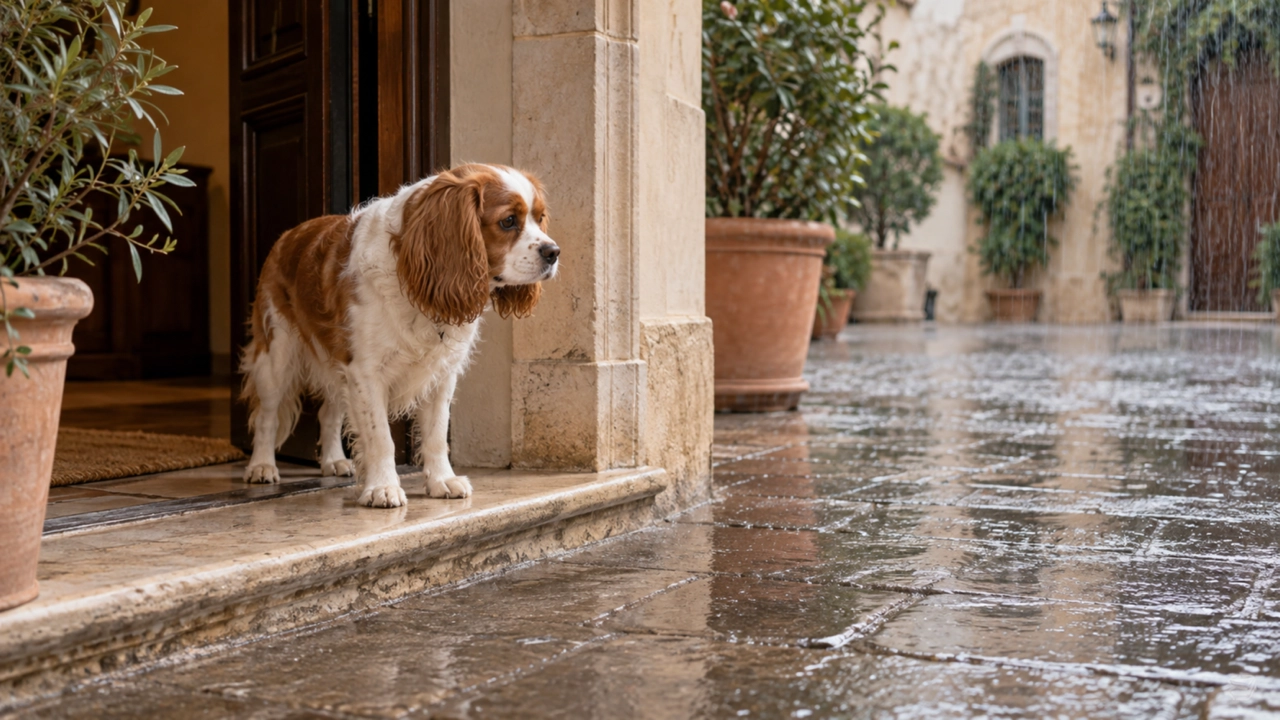
The lead is clipped on. The door opens. Your dog sees the rain and plants all four paws firmly behind the threshold.
It can look like stubbornness, especially when the same dog usually races outside. More often, refusing to walk in the rain is useful information. The sound may be unfamiliar, the wet ground may feel unpleasant, or a cold coat may make the whole outing uncomfortable. Some dogs barely notice a shower. Others would prefer to negotiate terms from the hallway.
The goal is not to prove that rain should not matter. It is to understand what your dog finds difficult, make the experience easier and keep essential outings calm.
Work out what your dog dislikes
Rain changes several things at once. Drops land on the face and back. Pavements become reflective. Gutters make noise. Familiar scents shift, umbrellas appear at head height and passing vehicles send water towards the kerb. A dog who is comfortable with one of these changes may still dislike another.
Watch where the hesitation begins. A dog who refuses at the open door may dislike rain falling on their body. One who walks until reaching wet grass may be reacting to the surface. A dog who becomes worried only during heavy rain could be responding to wind, thunder or sudden sounds rather than water itself.
Body language helps separate mild reluctance from real distress. Turning away, repeatedly lifting paws or trying to return home suggests discomfort. A tucked tail, trembling, freezing, frantic pulling or refusing food can indicate that the situation is too difficult for training in that moment.
Do not drag a frightened dog into the weather. You may get outside, but you are unlikely to make the next rainy walk easier.
Begin with the smallest useful outing
On a wet day, success does not need to mean completing the usual route. Start with a short toilet break or a few quiet minutes near home. Choose a sheltered doorway, covered path or calm stretch of pavement if one is available.
Let your dog pause at the threshold. Reward a look outside, then a step. Keep the lead loose and your own manner unhurried. Once your dog has done what they need to do, returning home can be a sensible finish rather than a missed training opportunity.
If light rain is manageable, use those conditions for practice before attempting a downpour. Increase time gradually across several outings. The useful measure is not distance. It is whether your dog can move, sniff and respond without becoming overwhelmed.
Dogs who normally enjoy stopping to investigate may need extra time because wet weather changes the scent picture. Our guide to why dogs stop and sniff on walks explains why a slower pace can still be a worthwhile outing.
Make rain predict something good
Positive associations are built in small repetitions. Keep a few treats near the door and reward calm engagement with the wet environment. For a dog motivated by play, a brief game under cover can make the beginning of the outing feel familiar.
Timing matters. Offer the reward when your dog chooses to look, step forward or walk with you. Avoid using food to lure them far beyond the point where they feel safe. If they take the treat and immediately scramble home, the step was probably too large.
Practise when there is no urgent schedule. Standing in heavy rain while both of you become frustrated will not improve the lesson. A quiet five-minute session in drizzle is often more useful than one long battle in a storm.
Keep your cue simple and consistent. A calm “let’s go” can signal movement, while a release cue can tell your dog when it is time to sniff. Predictability removes one more uncertainty from an already changed environment.
Choose clothing for comfort, not appearance
Some dogs are more sensitive to wet and cold conditions, particularly those with short coats, little body fat or small bodies close to the ground. A lightweight, water-resistant coat may help if it keeps the torso drier without restricting normal movement.
Fit matters. Check that the coat does not tighten across the shoulders, rub behind the front legs, cover the tail awkwardly or interfere with the harness and lead. Let your dog investigate it indoors first. Build from a few seconds of wear to moving around the room before adding rain.
Boots are not an automatic solution. They can help an individual dog who strongly dislikes wet ground, but the sensation of wearing them may be harder than the rain itself. Introduce them one at a time at home and stop if your dog remains distressed.
Whatever you use, check it during the walk. Wet fabric can shift or become heavy. Remove clothing promptly indoors and allow both coat and dog to dry fully.
Adjust the route as well as the gear
A familiar route can feel very different in bad weather. Choose good drainage and grippy surfaces. Avoid deep standing water, fast-flowing runoff and paths where fallen leaves, smooth stone or mud make footing uncertain.
Quieter streets may be easier for a dog unsettled by spray from traffic or the movement of umbrellas. Buildings, mature trees and covered walkways can reduce the sensation of rain without removing it completely. Stay aware of overhead risks and local weather warnings; shelter under a tree is not appropriate during thunder or strong wind.
Visibility also changes. Use a lead and make sure you can be seen in dull conditions. Give cyclists, runners and other dogs more space because hoods and rain noise can make it harder for everyone to notice one another.
If conditions become severe, turn back. Floodwater, lightning, damaging wind and poor visibility are safety questions, not training challenges.
Replace what the shortened walk missed
A brief rainy outing may cover toileting but not the movement, exploration or interaction your dog usually gets from a walk. Bring some of that value indoors.
Scatter part of a meal for your dog to search for, hide treats around one safe room or practise a few familiar cues. A cardboard box with loosely folded paper can become a simple supervised search activity. Gentle play, chewing and short training sessions all offer different forms of engagement.
Match the activity to the dog rather than trying to exhaust them. A dog who found the weather stressful may first need a quiet place to settle. One shortened walk does not need to be repaid with an intense indoor programme.
Create an easy return home
Prepare before you leave. Put an absorbent towel by the door and clear a non-slip place to pause. On returning, give your dog room to shake outside or in an easy-to-clean area, then blot the coat rather than rubbing roughly.
Dry the paws and check between the toes for grit or debris. The step-by-step routine in how to clean your dog’s paws after a walk is useful when wet streets have brought more than rain home.
A calm arrival matters. If every rainy walk ends with wrestling over a towel, reluctance may begin before the next one starts. Practise brief handling and towelling when your dog is already dry, rewarding stillness in small steps.
Know when reluctance needs a closer look
Weather preferences vary, but a sudden change deserves attention. Speak with your veterinarian if a dog who previously walked comfortably begins refusing in all conditions, seems stiff, limps, has sore paws, reacts when dressed or handled, or shows other changes in movement, appetite or behaviour.
For fear linked to thunder or storms, ask a veterinarian or qualified reward-based behaviour professional for an individual plan. Waiting until the loudest storm of the season to practise can leave both of you with very little room to succeed.
There is no prize for completing the usual circuit in miserable conditions. A useful rainy-day routine may be shorter, slower and more sheltered. If your dog can step outside, take care of essentials and return without panic, that is a sound place to begin.
Join the Ottimo Plus waitlist for considered dog essentials designed around everyday life together.