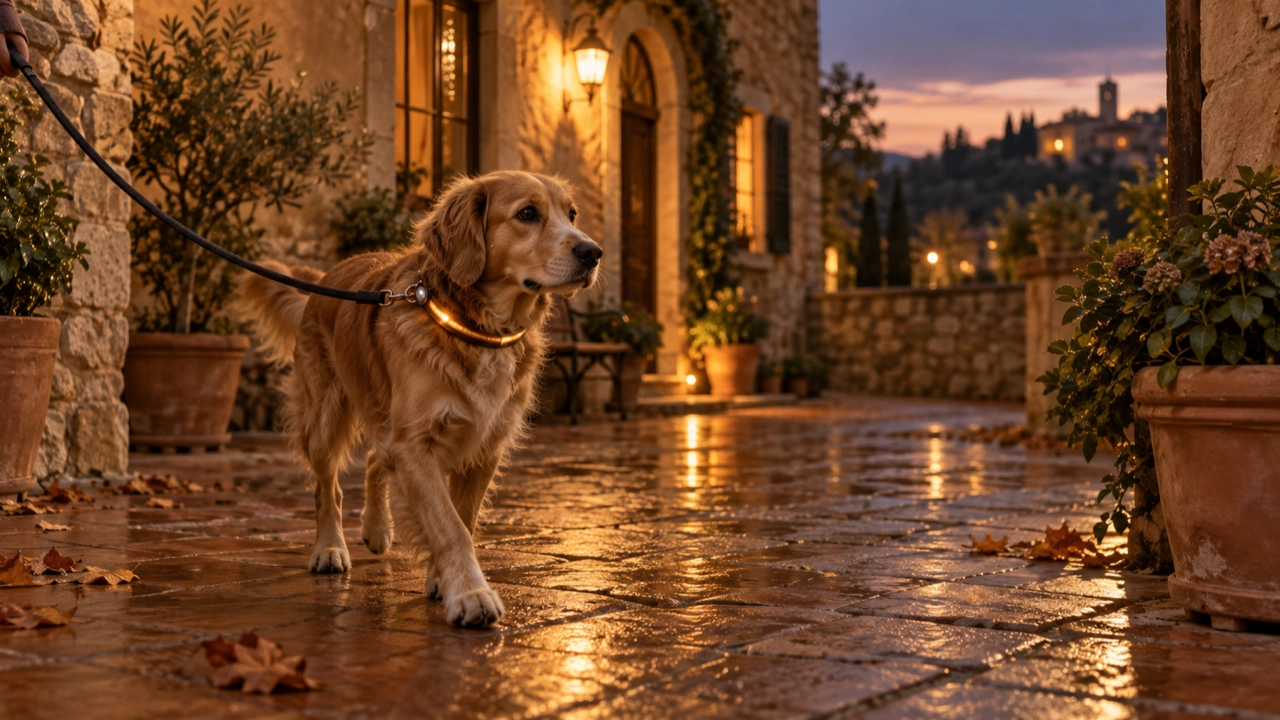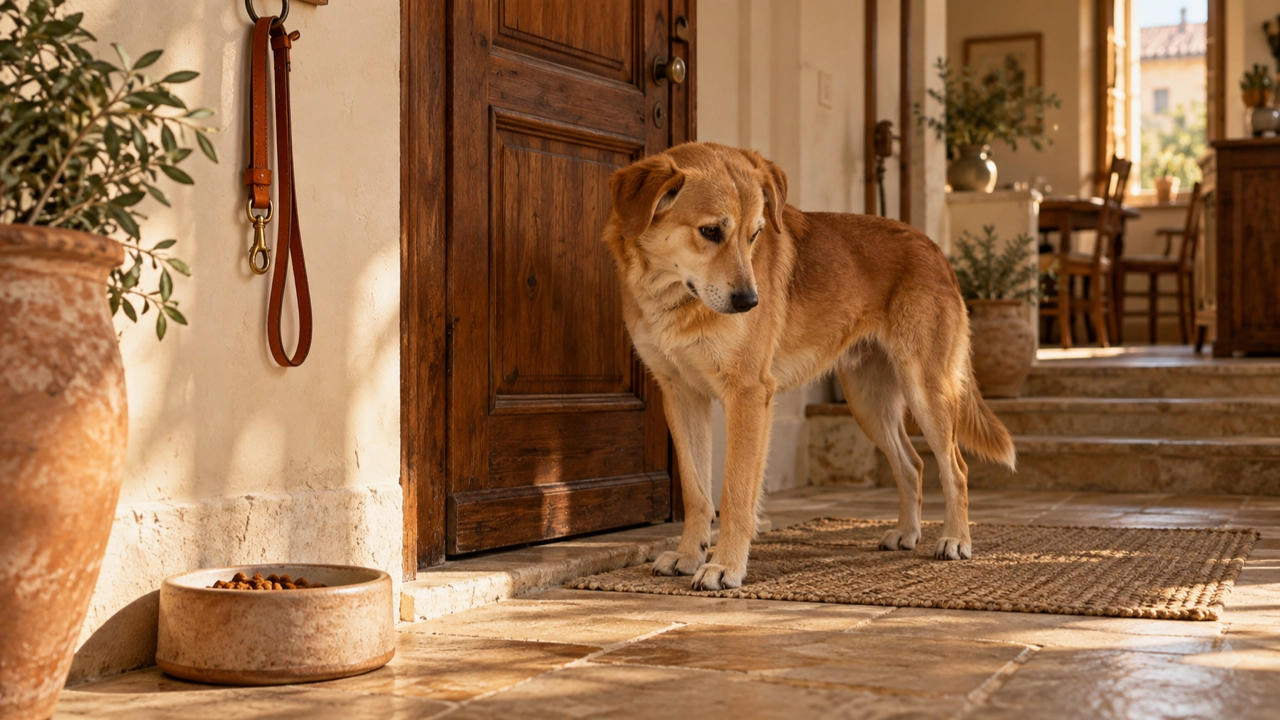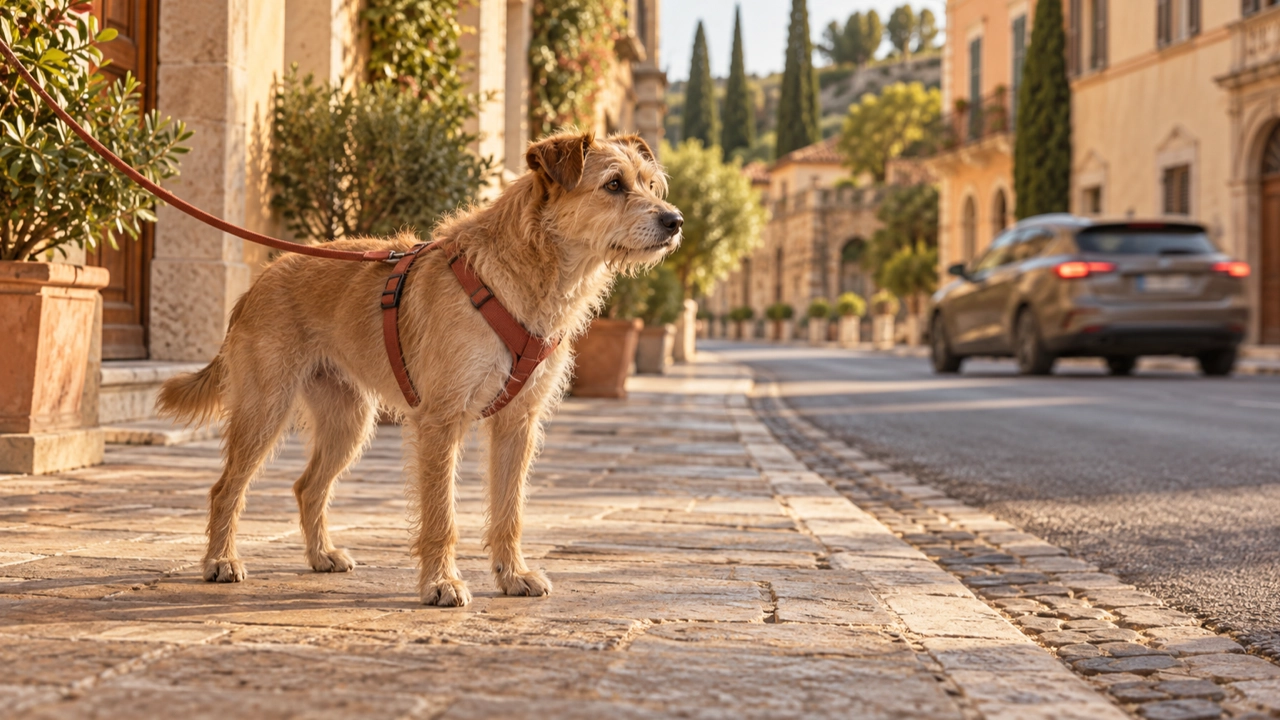
Your dog stops at the kerb as a bus pulls in. They press against your legs, and when the bus passes, they try to turn back towards home. The walk you planned has already changed.
Many dogs find traffic unsettling. Some barely notice it. Others find each passing vehicle hard to bear. If your dog is scared of traffic, start by understanding what they are reacting to. Then build their confidence slowly, at a distance where they can still cope. Both steps work best before fear starts to shape every walk.
What traffic feels like from a dog’s height
Walk a busy road at dog height and the experience changes. Wheels sit close to the ground, right beside your dog. Tyres hiss on wet tarmac, brakes squeal and horns can sound sharp enough to make you flinch. Dogs hear higher-pitched sounds more keenly than we do, so the noise at the kerb may feel more intense to them.
Movement is the second factor. Vehicles travel fast, in patterns a dog cannot read, and a driver may not see a small dog at the kerb. A car can come up from behind, pass with a rush of air and be gone before your dog has decided what happened. A dog who cannot predict what comes next has little reason to relax.
Smell and size add to the picture. Exhaust and hot brakes give off strong smells at ground level, and a bus or lorry can loom over a small dog. None of this makes your dog difficult. It makes a busy street an unusually demanding place.
Many streets were laid out around vehicles first, with narrow pavements beside fast traffic. A dog who finds that unsettling is responding sensibly to the design. Walk your usual route and notice what it asks of your dog. Where does the pavement narrow? Where do cars pass closest? Where is the first moment a vehicle is loud or fast?
Read the signs before the fear grows
Fear often shows first in small signals: a slower pace, a pause before stepping off, a glance at the road and then back at you. Look for a lowered body, ears held back, a tucked tail, lip licking, yawning or panting that is not explained by heat or effort. Any of these can mean your dog is uncomfortable.
Notice what your dog does as a vehicle gets close. Some dogs try to move away. Others freeze, sit down or press into your legs. Some bark or lunge. Barking and lunging do not always mean fear, since frustration and excitement can look similar at a glance. Watch the whole dog and the context.
Recovery matters too. A dog who settles within moments of a van passing is coping very differently from one who stays wound up for the rest of the walk. How quickly your dog recovers shows how much distance they need.
Start at a distance where your dog can still think
The most useful change is distance. Find a spot where your dog can see traffic without being overwhelmed. At that distance, they should still be able to take a treat, look back at you and move on when you ask. For many nervous dogs, that spot is further back than owners expect.
Pair the sight and sound of passing vehicles with something your dog values. When a car goes past and your dog glances at it, say “yes” and give a treat. Over time, the vehicle starts to predict good things rather than surprises. Keep sessions short, and finish while your dog still looks comfortable. Stopping while things still go well works better than asking for one more car.
Move closer only once your dog has stayed relaxed for several sessions. If they start refusing food, panting or turning away, step back to where they were comfortable. Progress usually takes weeks rather than a single good walk.
Do not hold a frightened dog still while traffic passes. Restraint can make them feel trapped. Forcing them to stay in a frightening place rarely builds confidence. Your aim is to help your dog feel safe with you nearby, not to prove they can cope with the worst moment.
The same principle runs through our guide to preparing a dog for public transport. It starts with a quiet visit, standing well back, and moves closer only on later visits.
Choose routes and times that set your dog up to succeed
Before you train, make the walk easier. Choose streets with a buffer between the pavement and the road, such as a verge, a hedge or a row of trees. A quiet residential loop that avoids the main road can turn a difficult walk into a useful one. Our guide to what makes a city dog-friendly asks similar questions: how wide the pavement is, how calm the crossings are and whether a quieter loop exists.
Timing matters as well. Rush hour and school drop-off are usually the busiest. Mid-morning and mid-afternoon are often quieter on residential streets. Try a few different times and note which one leaves your dog most settled. A calmer hour is a sensible start, not a shortcut.
Position yourself carefully. Keep your dog on the side away from the road, so you stand between them and the traffic. Use crossings with lights or a central island where you can, and wait until the way is clear before stepping off. If you need to pause, stop where you can both stand back from the kerb.
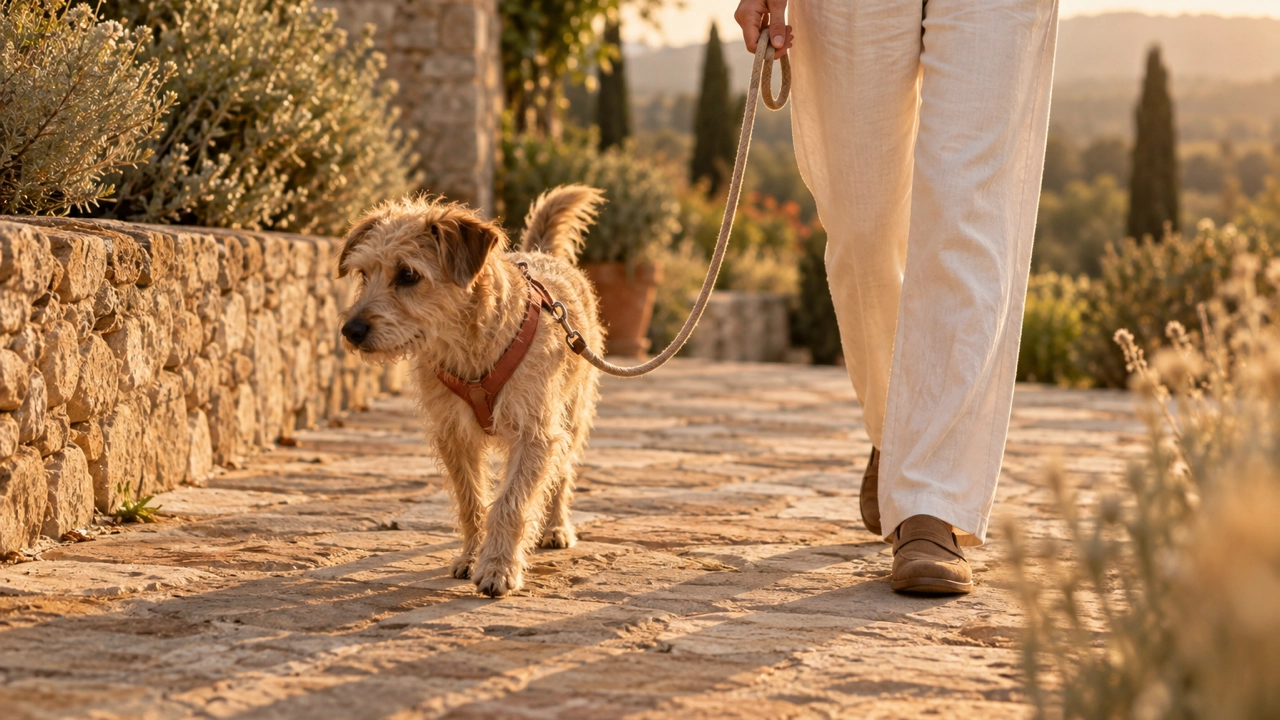
Keep the lead shorter near traffic, but not tight. You are not trying to restrain your dog. You are giving them a steady, predictable connection so they know where you are. Our guide to how long a dog lead should be explains how the setting should change the length you choose. Check that the harness or collar fits well before you leave.
Routine helps too. Use the same crossings, pauses and turning points where you can. A dog who knows roughly what happens next tends to feel less at the mercy of the road.
Keep your own response steady
Your reaction matters as much as the route. Stay calm and speak in an ordinary voice. Dogs notice tension in the lead and in your tone. If your dog flinches as a van passes, keep your own movement easy and unhurried. Quiet reassurance is fine. Your steadiness shows them the moment is ordinary.
When to ask for help
See your vet first if the change is sudden. A dog who used to take traffic in their stride and now refuses to walk near it may be in pain, or may have a change in hearing or sight. Your vet can rule out medical causes and advise next steps.
Bring in a qualified, reward-based trainer or behaviourist if your dog freezes for long periods, bolts, snaps or lunges at vehicles, or if the fear spreads to other moving things such as bicycles. Ask how they work and what equipment they use. Avoid anyone who relies on pain, startle or intimidation. A good professional sets the distance, builds the plan gradually and explains each step.
In the meantime, keep the walk safe. A frightened dog can bolt into the road. Use a well-fitting harness or collar, check that the clip is secure and make sure your dog’s ID tag and microchip details are up to date. If your dog cannot manage walks near traffic at all, choose a quieter route and seek advice rather than forcing the issue.
Most dogs do not need to love traffic. They need enough distance, predictability and time to learn that a passing van is just a passing van. Build that slowly, choose routes with care and let your dog set the pace within safe limits.