There is no single distance that suits every puppy. A young Labrador, a Chihuahua and a Great Dane may all be twelve weeks old, yet their bodies are growing at very different speeds and will finish growing at very different times.
What can be said is this: puppies need movement, but they need it in measured amounts. The aim is not to tire a puppy out. It is to give them enough varied, low-pressure activity to grow strong and curious, without asking more of developing joints than they can comfortably give.
What the five-minute rule actually is
You will often hear that a puppy can walk for five minutes per month of age, once or twice a day. At three months, that is about fifteen minutes. At six months, about thirty.
It is a useful starting point and a poor law. As far as we can tell, it is a rule of thumb that grew out of common practice rather than a figure from controlled research, and it ignores almost everything that matters: breed, size, build, fitness, surface, weather and the individual puppy’s mood that day. A sturdy, confident terrier cross may find fifteen minutes trivial. A heavy-boned large-breed puppy may be better served by less lead walking than the rule suggests, with more rest in between.
Treat it as a ceiling for structured walks while you learn your puppy, not a target to reach. If your puppy is lagging at ten minutes, the rule has no say in the matter. Go home.
Why size and growth stage change the answer
Puppies grow from areas of developing bone near the ends of their long bones, often called growth plates. These close at different times depending on size. Smaller breeds typically finish growing within the first year. Large and giant breeds can take well over a year, sometimes closer to two.
In practice, this means large-breed puppies deserve extra restraint with repetitive, high-impact activity for longer. Think long runs beside a bicycle, endless fetch on hard ground, or repeated jumping. Smaller breeds are not exempt from sensible limits, but they tend to reach a more settled adult routine sooner.
Your veterinarian knows your puppy’s breed, build and growth pattern. If you are unsure how much is right, or you have a breed prone to joint or breathing problems, ask them for guidance rather than relying on a general figure.
A rough picture by age
These are starting points, not prescriptions, and they assume a healthy puppy.
Before vaccinations are complete. Your vet will tell you when your puppy is considered protected and where they can safely go until then. Until that point, much of the early outdoor time is often garden exploration, short carried trips and meeting calm people and sounds, rather than public walking routes.
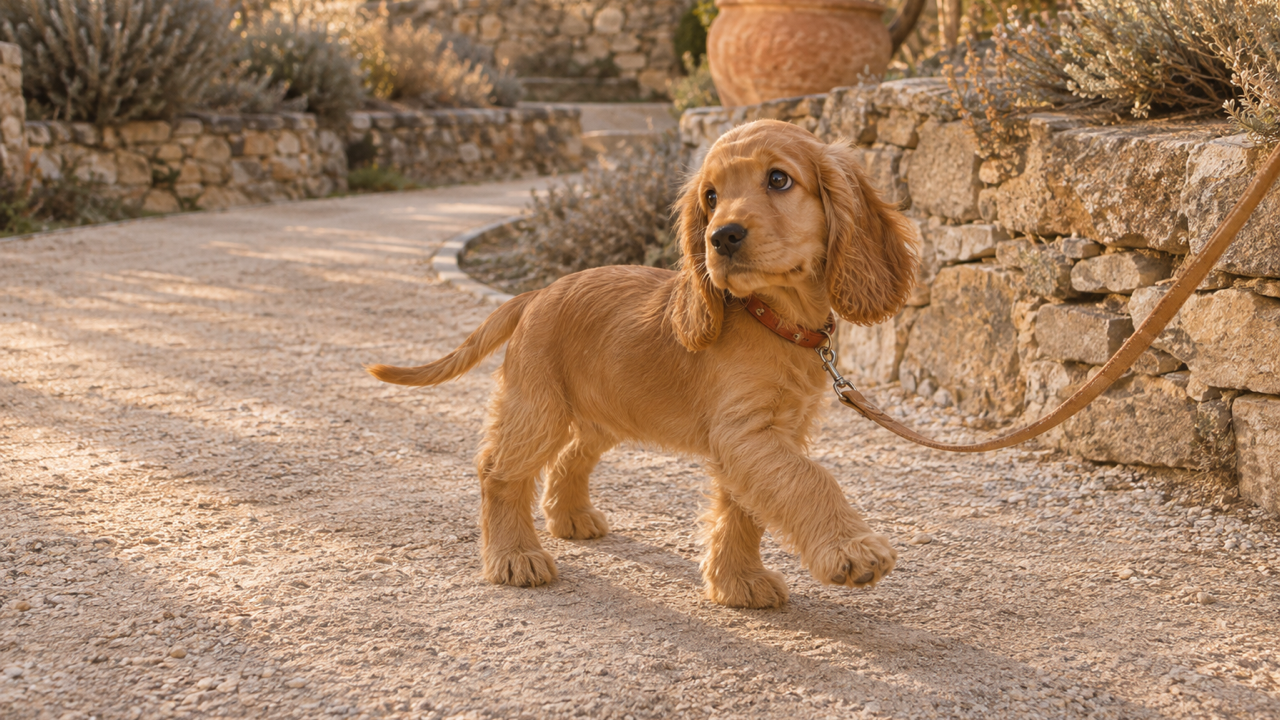
Roughly 3 to 6 months. Short, frequent outings tend to work better than one longer one. Think two or three brief walks, with plenty of time to stop and look around. At this age, variety and pace matter more than distance.
Roughly 6 to 12 months. Many puppies can build gradually, with walks lengthening as fitness improves. Adolescence can bring bursts of energy that do not match the body’s readiness, so a keen puppy is not always a ready one, especially in large breeds.
After the first year, and beyond. Smaller breeds may now be close to adult routines. Large and giant breeds are often still maturing, so extend slowly and keep watching how they recover.
Free play is not the same as a lead walk
A common mistake is counting only the walk. A puppy racing around the garden, tumbling with a friend or spending an afternoon in a playpen with toys is moving too, in a different way from a steady walk on lead.
Free play is self-paced. Puppies stop, flop down, start again and change direction as they choose. Lead walking is different: your puppy is moving at a pace and for a duration that you decide, often on firm surfaces, and they may keep going out of excitement rather than readiness.
Sniffing matters here too. A slow ten minutes spent investigating one hedge can be more mentally absorbing than a brisk thirty. If you want to understand why, our piece on why dogs stop and sniff on walks covers what that pause is doing. For a puppy, it is also gentle, low-impact work.
Signs you have done too much
Puppies rarely say when they are tired. Many keep going until they suddenly cannot. Look for:
- Slowing down, lagging behind or pulling back towards home
- Sitting or lying down on the walk and refusing to continue
- Heavy panting that does not settle quickly in cool conditions
- Stiffness, a shortened stride or limping, during or after the outing
- Being unusually clingy, grumpy or overtired and unable to settle that evening
- Reluctance to climb stairs or jump into the car the next day
The day after is as informative as the walk itself. If any of these appear, shorten the next outing and build back slowly. Limping, repeated stiffness or any change that persists is worth a call to your vet.
An overtired puppy may also seem wired rather than sleepy: biting more, running in circles, ignoring cues. That is a good time for a quiet rest, not another game.
Surfaces, weather and water
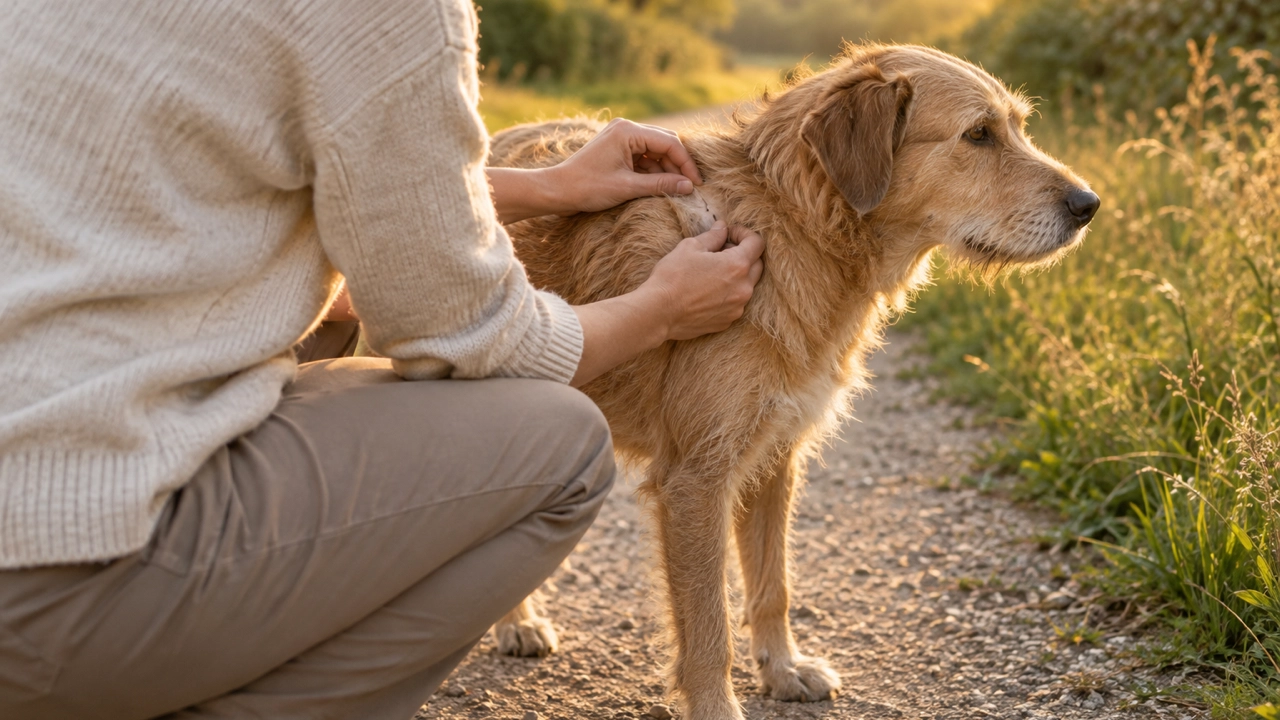
Soft, varied ground such as grass, packed earth or woodland paths is usually kinder to young joints than hours on pavement. Young paw pads can also be tender on rough ground. Check them after a walk and take a look at how to clean dog paws after a walk if you want a simple routine.
Heat matters more for puppies than most owners expect. They have little tolerance for warm weather, and tarmac can be far hotter than the air above it. Press the back of your hand to the surface for several seconds: if it is uncomfortable for you, it is too hot for paws. How hot is too hot to walk a dog is worth a read before the summer routine begins.
In cold or wet weather, a young, small or short-coated puppy may want a shorter outing than usual. Our guide to how cold is too cold to walk a dog offers a more detailed framework.
Whatever the weather, bring water and offer it during and after the walk. Puppies are easy to underestimate here, and a small bottle in a bag is rarely wasted. Our guide to reading hot-weather hydration signals covers what to watch for.
Build distance slowly
Fitness is built gradually, in puppies as in people. A reasonable approach is to keep a starting routine for a week or two, then lengthen one walk by a few minutes only if your puppy finishes bright and recovers well. Change one thing at a time: either duration, or terrain, or pace, not all three.
Keep an eye on the lead, too. A puppy that lunges and pulls sets a pace of their own, and the effort adds up. If walks are becoming a tug of war, why dogs pull on the lead is a good place to start, and a well-fitted harness helps; puppies outgrow gear quickly, so recheck how a dog harness should fit regularly.
Most importantly, end walks while your puppy still has something left. A comfortable, interested puppy who returns home ready to sleep has had a good walk. One who has to be coaxed the last stretch has simply told you where today’s limit was.
A sensible working rule
Start short. Let the puppy set the pace. Count free play as part of the day. Favour soft surfaces and cool conditions. Increase gradually, and take the day-after reaction seriously. The five-minute rule can sit in the background as a rough guide, but your puppy’s behaviour is the better measure, and your vet is the best guide when you are unsure.