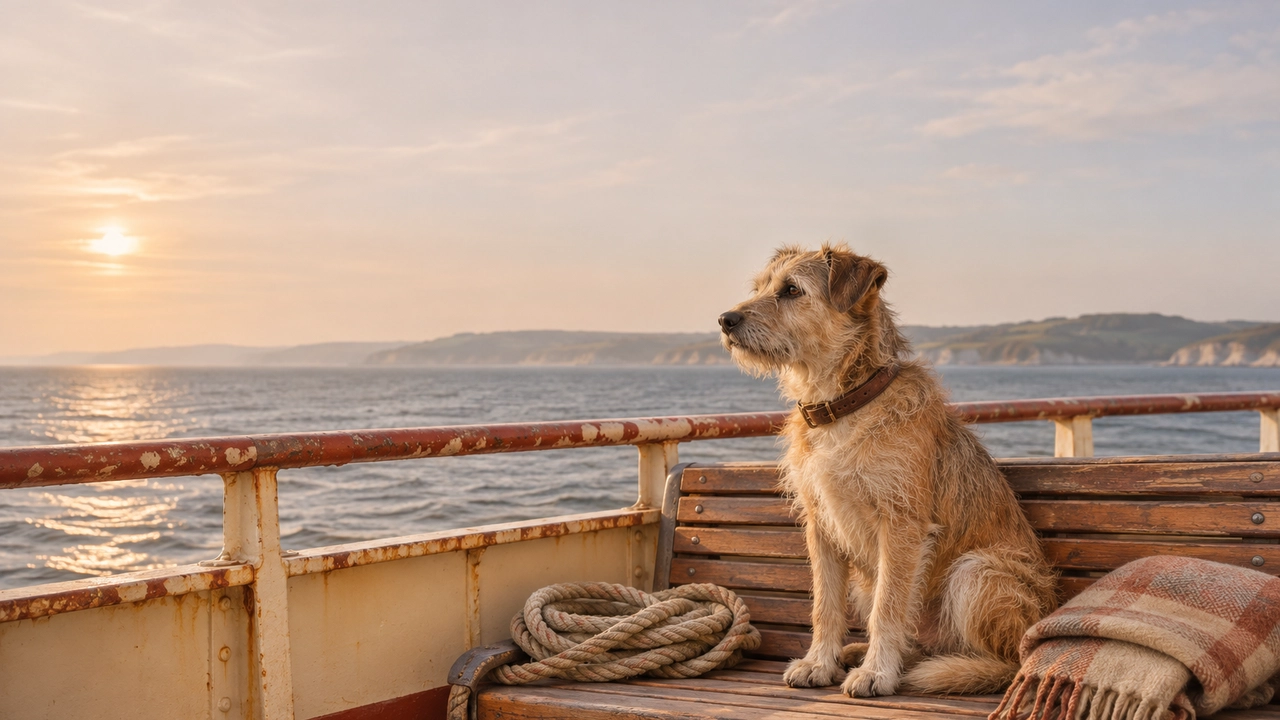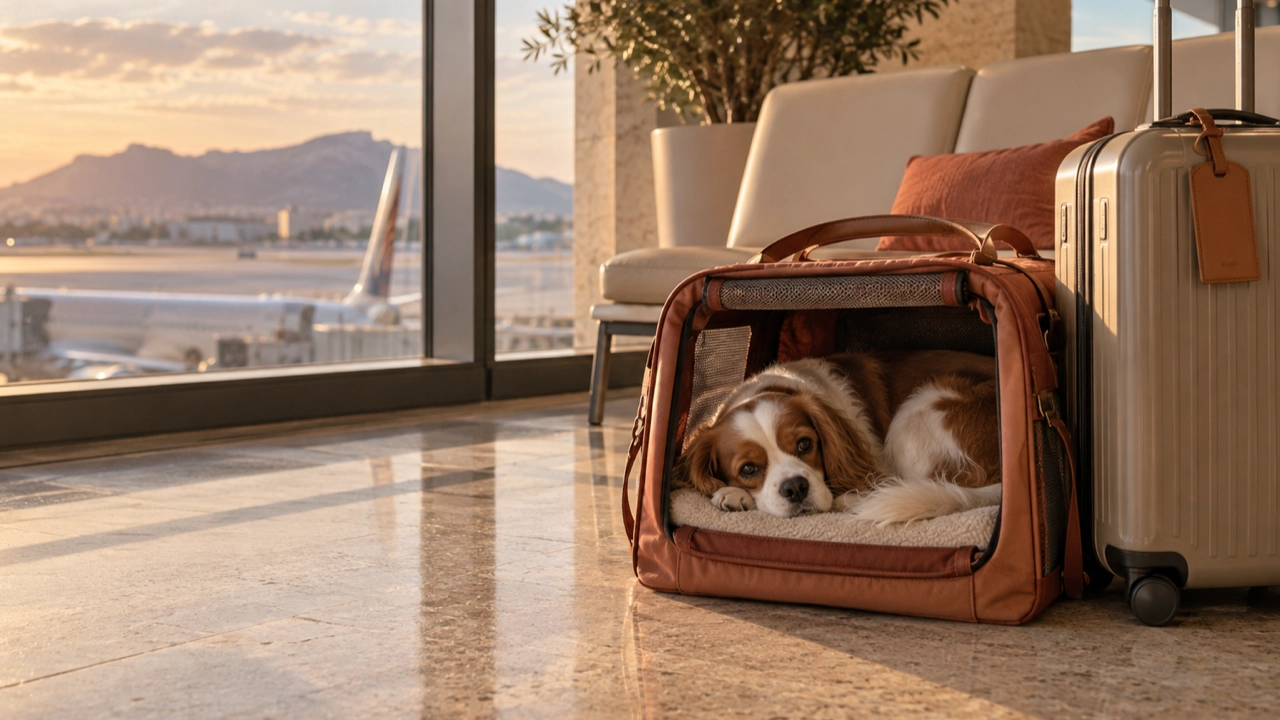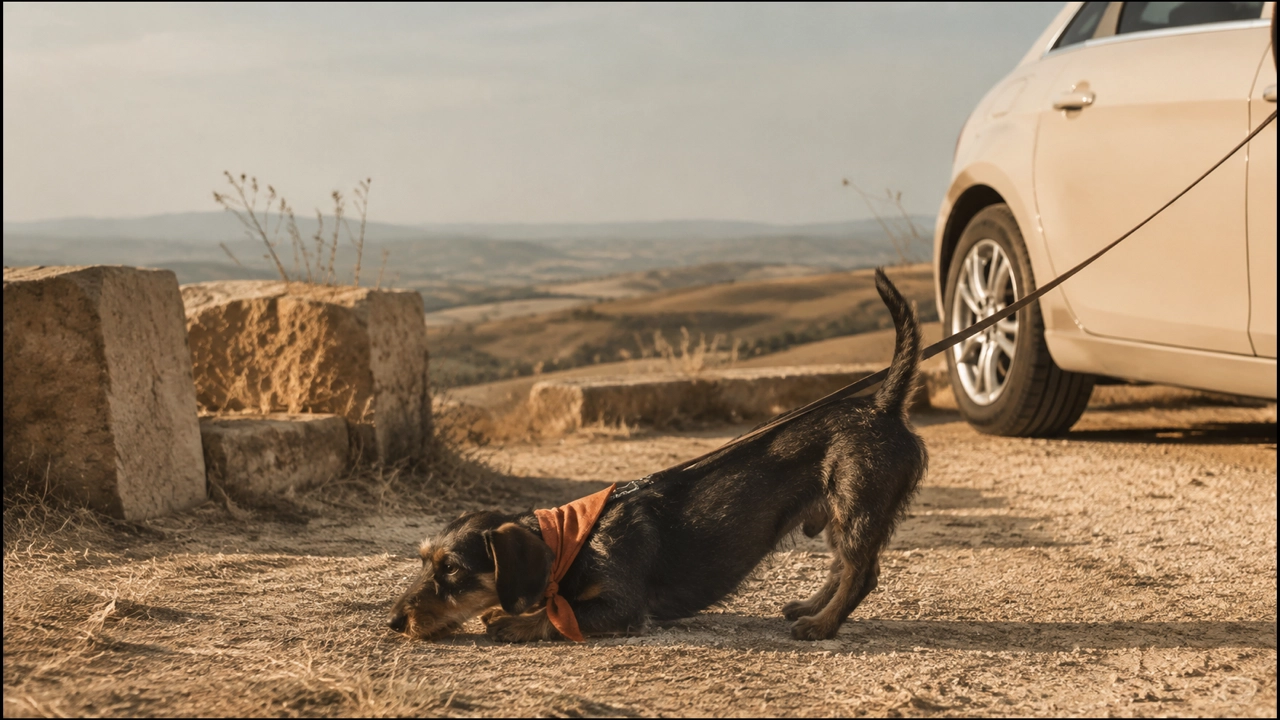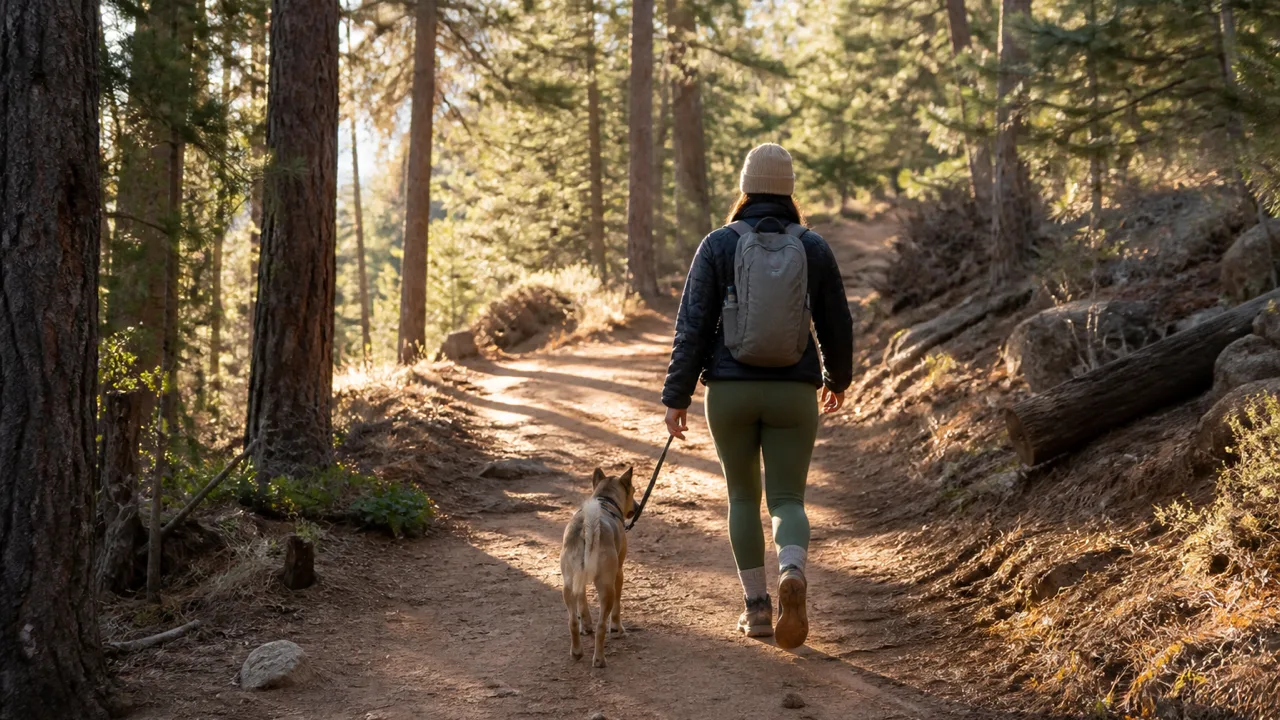
A night outside is one of the best things you can do with a dog. The walk to the pitch, the evening fire, the slow morning. For them it is hours of new smells with you close by.
Camping with a dog does not take special skills. It takes a little planning, mostly before you leave and in the first hour after you arrive. Get those right and the rest is easy.
Choose the site before you choose the dates
Not every campsite welcomes dogs. Some allow them everywhere. Some restrict them to certain pitches or loops. Some do not allow them at all. Read the site’s rules before you book, then read them again before you pack.
Look for the details that affect your stay. Is there a lead requirement? Is there a limit on how many dogs per pitch? Are dogs allowed in the shower block or the shop? Can they be left alone in a tent or caravan, even briefly? Most sites say no to that last one, and it is worth planning around.
If you can, pick a pitch with natural shade and a little distance from the busiest paths. Next to the toilets or the play area is rarely the right place for a dog who is still learning to relax around crowds.
For a nervous dog, a quieter, smaller site often beats a large, lively one. On a first trip, camp close to home, so a poor night means a short drive back.
Set up the pitch for your dog
The first thing to do on arrival is give your dog a few minutes to sniff the edges of the pitch. Then set up with their needs in mind, not just yours.
Shade. Place the tent so your dog has shade at the warmest part of the day, and check again as the sun moves. A tarp or an awning is useful. A dog tied up in full sun is a problem even on a mild day.
Where they stay. You have three sensible options, and the right one depends on your dog.
- A tether or tie-out line. A line run between two fixed points lets a dog move without wandering. Use a harness or a flat collar that cannot slip, and keep the line short enough that they cannot wrap it around a tree or a guy rope. Stay close while they are on it, never leave them unattended, and check the site allows it. Our guide to how long a dog lead should be covers the logic of length and control.
- A crate or pen. If your dog already treats a crate as a calm space, bring it. It gives them a familiar spot and keeps them out of the way of the cooking area. If you are unsure whether it suits your dog, does your dog need a crate is a good place to start.
- The tent itself. Many dogs sleep inside the tent with their owners. Most tents have a vestibule or porch, which makes a handy intermediate zone for muddy paws and a water bowl.
Keep the fire, stove and lanterns well away from where your dog is lying. Guy ropes and tent pegs are easy to trip over in the dark, for both of you.
Sleeping in a tent
A dog sleeping in a tent usually does well if they have their own space and something familiar to settle on.
Bring their usual bed or a blanket that smells like home. A thin mat or a folded blanket underneath is worth having too, because the ground draws warmth away from a dog just as it does from you. On cooler nights, a dog with a short or thin coat may want an extra layer. Watch for shivering, and adjust.
Put the bed along a side of the tent, away from the door. That keeps them out of the draught and stops them being the first thing to trip over when you get up in the night.
Keep a lead and a torch within reach. Many dogs bark at the unfamiliar sounds of a campsite on the first night. It usually fades once they realise nothing needs defending.
Water, food and snacks
A dog on a camping trip needs water more often than at home, because they are walking more and the air is often drier or warmer than expected. Bring more than you think you need, and do not rely on a stream or a standing pool. Natural water can carry bacteria and parasites that make dogs ill.
Offer water at the pitch, before you set off and whenever you stop on a walk. A dog hydration guide for hikes goes into more detail on how much and how often. A collapsible bowl or a bottle designed for dogs makes this easy to do without thinking.
Feed your usual food at your usual times. A camping trip is not the moment to try something new. Pack a little extra in case you stay longer.
Food storage and wildlife
Food smells carry. Keep your own food, your dog’s food and any treats in sealed containers or in the car, never in the tent. Tidy up after meals. Check the site’s guidance on local wildlife, because some areas have foxes, badgers, raccoons or larger animals that are drawn to food.
Keep your dog on a lead around wildlife and livestock. A dog that is calm at home can behave very differently when something runs across the path at dusk. If the area has particular risks, ask the owner or ranger when you arrive.
Ticks, plants and paws
After a day in grass, bracken or woodland, run your hands over your dog and look for ticks, especially around the ears, armpits, groin and between the toes. Remove any you find with a proper tick tool and ask your vet if you are unsure how to do it. If your dog seems unwell in the days that follow, call the vet.
Watch for burrs, seeds and thorns in the paws and coat. Check between the toes at the end of the day and again in the morning. Some plants, such as certain mushrooms and berries, can make a dog ill, so discourage grazing and scavenging on walks.
The first night
Plan a long, easy walk in the late afternoon. A tired dog settles faster. If you are unsure how much activity your dog needs away from home, total minutes matter more than the number of outings, as this piece on whether one walk a day is enough explains. Then a small meal, a drink, one last trip outside, and into the tent or the crate with their bed.
Stay calm and keep your voice low. If your dog is unsettled, sit with them for a few minutes rather than letting them roam or taking them out to explore at midnight. Most dogs adapt by the second evening, and many are asleep before you are.
Leave no trace
A campsite stays welcoming to dogs because owners behave well. A few habits keep it that way.
Pick up after your dog every time, and carry the bag out with you or use the bins provided. Keep to marked paths. Do not let your dog dig, chase wildlife or bark for long periods. Respect quiet hours, and keep them on a lead where it is required, which is most places.
When you pack up, walk the pitch once more. Look for treats, toys, bowls and bags left behind, then check you have taken everything you brought.
Pack what you will actually use
You do not need a long list. Bring their bed, a lead and a spare, a harness, food, water and a bowl, poo bags, a tick tool, a first aid kit, a towel and a torch. For a deeper look at what to carry and why, see our guide to choosing dog travel gear.
Choose a welcoming site, give them a clear place to rest, keep water close, and take everything home with you.